
Doody’s Core Titles are widely recognised as the benchmark in authoritative medical literature, meticulously curated to ensure practitioners and students alike have access to the very best in clinical knowledge.
The library is pleased to share with you selected titles from Doody’s Core 2025 Collection available free to BMA members. Whether you’re revising for exams, researching new clinical approaches, or simply expanding your medical horizons, these celebrated works are indispensable.
Adler’s Physiology of the Eye by Levin, Leonard A.
Brown’s Atlas of Regional Anesthesia by Farag, Ehab; Mounir-Soliman, Loran.

Campbell-Walsh-Wein Urology by Dmochowski, Roger R., editor.; Kavoussi, Louis R., editor.; Peters, Craig (Craig Andrew), editor.; Cooper, Christopher S., editor.; Porten, Sima, editor.; Gomelsky, Alex, editor.; Sweet, Robert M., editor.; Rai, Arun, editor.

Fenichel’s Clinical Pediatric Neurology: A Signs and Symptoms Approach by James, Kaitlin C.; Piña-Garza, J. Eric (Jesus Eric).
Firestein & Kelley’s Textbook of Rheumatology by Firestein, Gary S.
Guyton and Hall Textbook of Medical Physiology by Hall, John E. (John Edward); Hall, Michael E. (Michael Edward).
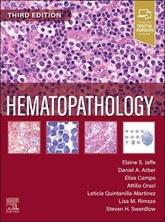
Hematopathology by Jaffe, Elaine Sarkin.

Klaus and Fanaroff’s Care of the High-Risk Neonate by Fanaroff, Avroy A.; Fanaroff, Jonathan M.

Netter’s Essential Physiology by Mulroney, Susan E., editor.

Robbins, Cotran & Kumar Pathologic Basis of Disease by Kumar, Vinay, 1944- editor.; Abbas, Abul K., editor.; Aster, Jon C., editor.; Debnath, Jayanta, editor.; Das, Abhijit, editor.; Cotran, Ramzi S., 1932-2000.; Robbins, Stanley L. (Stanley Leonard), 1915-2003.

Williams Textbook of Endocrinology by Melmed, Shlomo, editor.; Auchus, Richard J., editor.; Goldfine, Allison B., editor.; Rosen, Clifford J., editor.; Kopp, Peter A. (Peter Andreas), editor.; Williams, Robert Hardin.
To search for more titles, please visit the library catalogue.
We have recently changed the background system that provides access to our e-resources. We are now using OpenAthens.

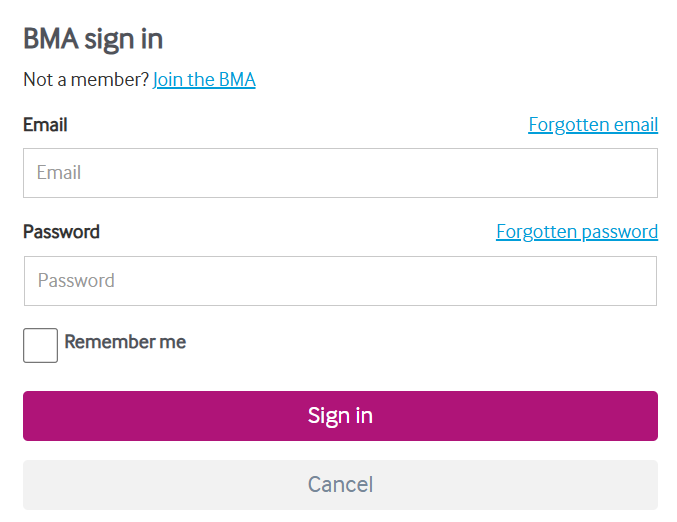
You shouldn’t notice any difference when you log in. You will still see the same BMA login page and still enter the same username and password:
You may notice a more seamless experience such as when you search the online catalogue for a particular journal that is hosted on ClinicalKey, you will find that you will go straight through to the full text of the article. Also, if you are a regular user of ClinicalKey Student you will no longer need to keep logging into this platform. These and many other improvements are all thanks to OpenAthens.
The way BMA members access our e-resources hasn’t changed, via our online catalogue and the BMA website, these are still our recommended routes to resources as this will ensure you are seeing everything held in the BMA Library collection.
Via the catalogue you can search by article title or book/chapter title to quickly find and access a particular piece of content that you are looking for.
But you can now access platforms, that we have subscriptions with, directly. To login directly, to BMA subscribed content, on publishers sites, look for the OpenAthens login option on the platform’s website and search for The British Medical Association on the list of Institutions.
Access to the other online resources the BMA provides to members – for example the BMJ; Rota Checker; and Specialty Explorer – are handled separately and still require BMA members to access them via the usual route – logging in with their BMA website username and password. Please DON’T select the OpenAthens login option on the websites of any of these resources as this will not work.
If you have any comments or feedback about us using OpenAthens for providing access to our e-resources, please get in touch with us by sending an email to: bma-library@bma.org.uk
We offer access to both the Embase and Medline databases on the Ovid platform.
Embase is a comprehensive, biomedical literature database, produced by the leading STEM publisher Elsevier, with a strong focus on pharmacology and medical devices.
Medline is the U.S. National Library of Medicine’s (NLM) primary bibliographic database for biomedical and life sciences literature, containing citations and abstracts from peer-reviewed journal articles.
Both databases index articles from thousands of peer reviewed medical journals.
On the Ovid platform it is possible to search each of these databases individually or simultaneously.

On the Ovid platform there are two very useful resources to assist with searching Embase and Medline.
There is the Help link near the top right hand corner of the screen which when clicked opens a pop up window listing numerous topics with helpful advice and guidance on each.
There is also the Ovid Search Builder (the button for accessing this is directly to the left of the Help link) which is a tool for helping the user to quickly and easily, step-by-step, construct a search strategy.
As well as the help available on the Ovid platform itself, there is a wealth of helpful information about searching Embase, Medline and various other online resources that are available to BMA members on our Research Resources page.
If you encounter any technical issues with accessing the Ovid platform please do get in touch with us by sending an email to bma-library@bma.org.uk and we will investigate the matter for you and work to get it resolved as soon as possible.
For certain aspects of the Ovid platform, such as the saved searches facility, you will need to contact the Support Team at Ovid for assistance. Their email address is: support@ovid.com.
If you have any comments or feedback about this blog post please do get in touch with us by sending an email to: bma-library@bma.org.uk
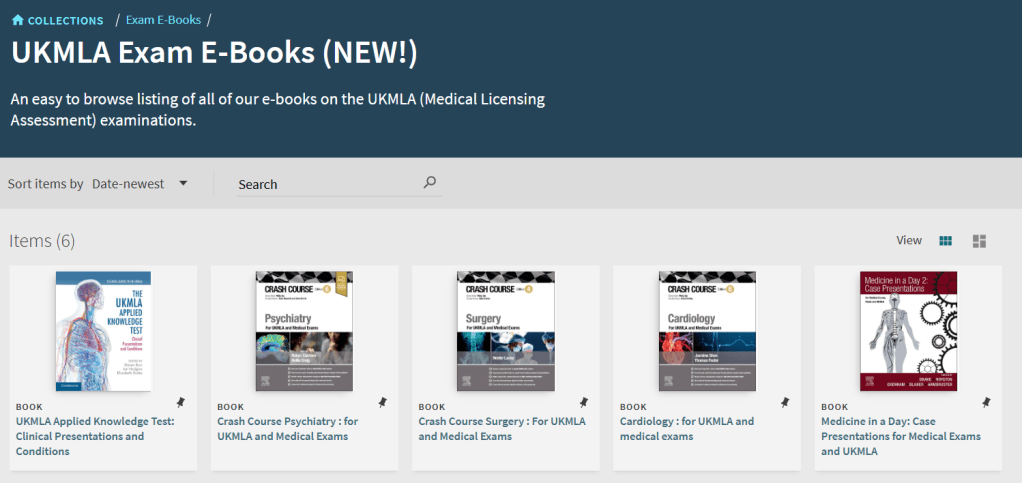
We have a growing collection of e-books on the UKMLA (Medical Licencing Assessment) exam.
These can all now be quickly and easily accessed via our newest curated collection.
If you have any comments or queries about this new curated collection, please email: bma-library@bma.org.uk
2025 marks the 100th anniversary of BMA House. In 1925, the British Medical Association moved from 429 The Strand to its new home in Tavistock Square.
The official opening ceremony of BMA House was on 13 July 1925. We have put together an online exhibition featuring an timeline spanning the 100 years of BMA House. Keep on reading this blog for some behind the scenes additions.
The BMA archives contain a vast amount of material where the building and its architecture are either the main subject, or the backdrop of the BMA’s everyday life and special events.
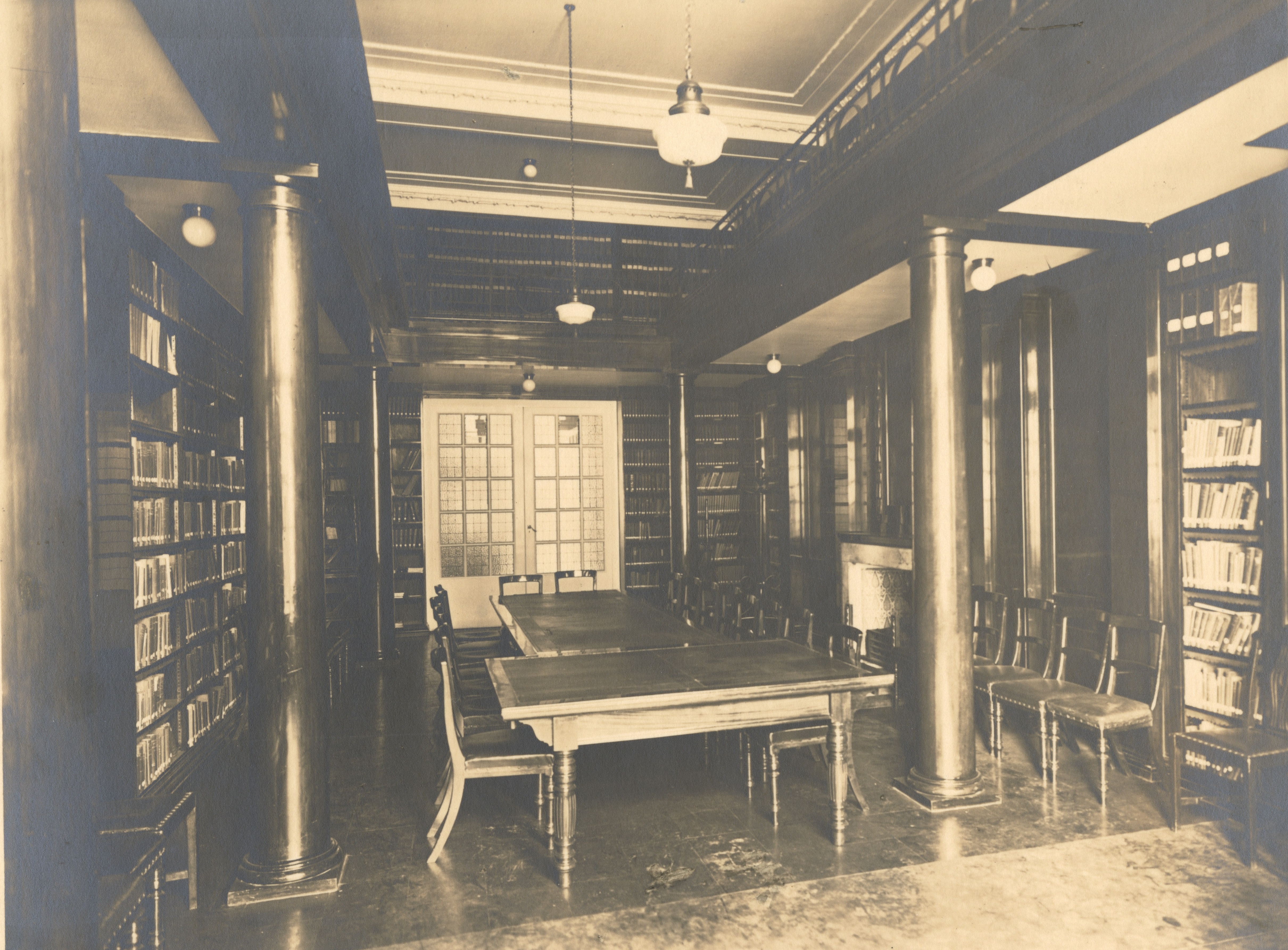
Here are a few photographs of rooms in BMA House, taken in the late 1920s. At this point, two architects had successively created parts of the building, Edwin Lutyens and Cyril Wontner-Smith.
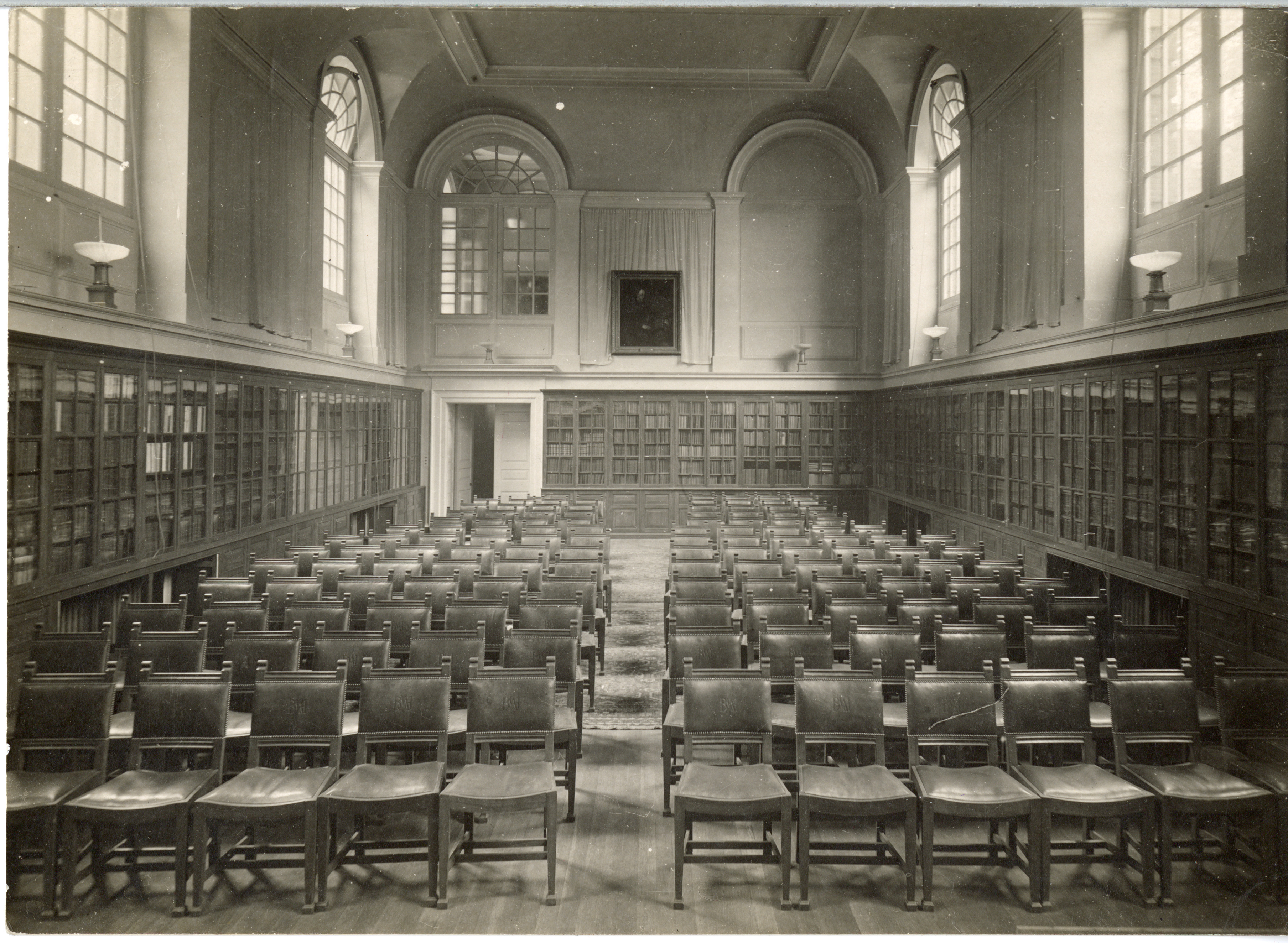

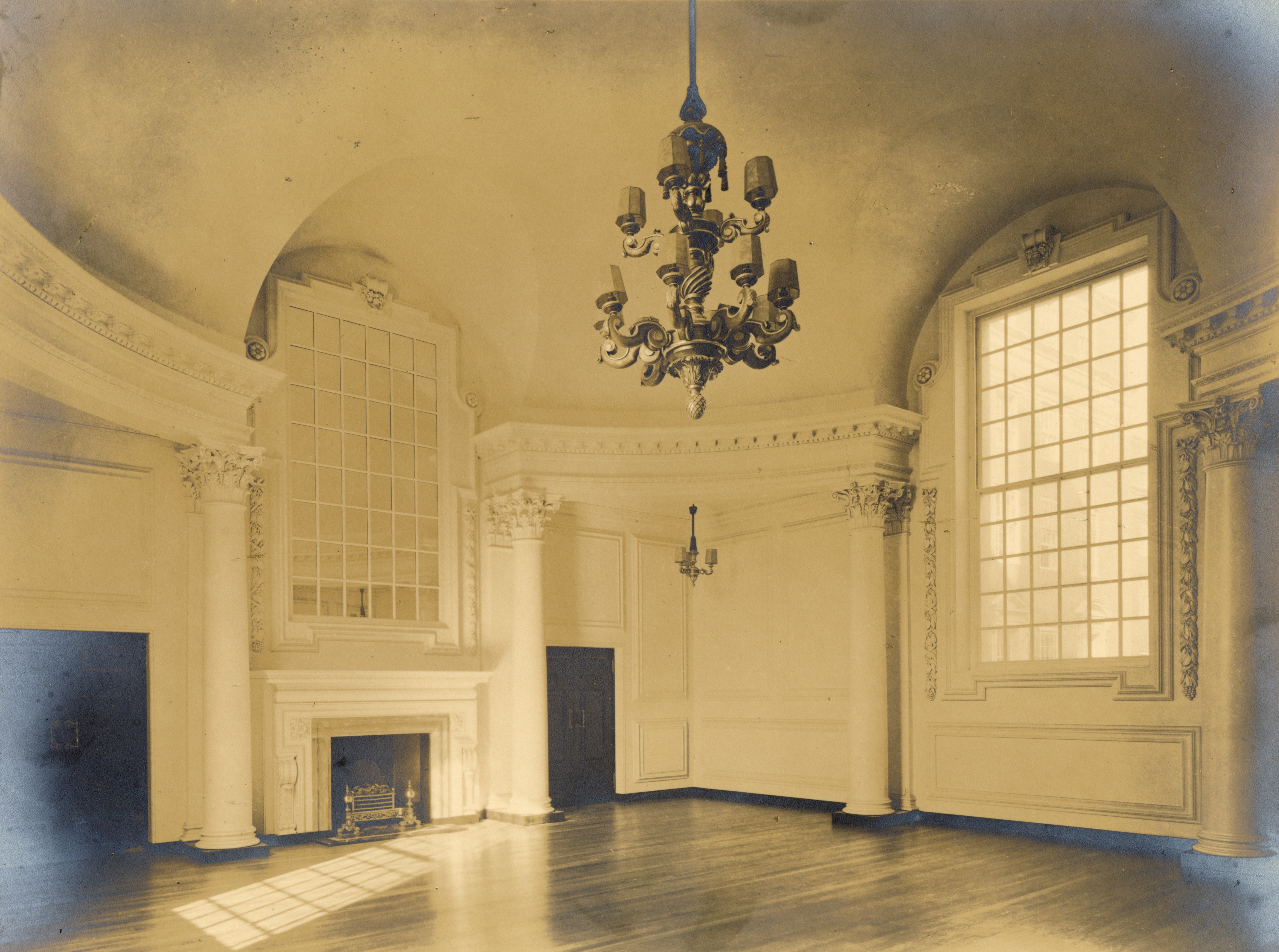
To help us better understand the history and evolution of the building, we also have in the archive several plans and elevations from the various architects who have worked on BMA House over the years
Here you can compare two plans of the ground floor, from 1924 and 1952. 1924 shown upside down to keep the same orientation.


We also have further information regarding the War Memorial fountain, which is not on the 1952 plan, as it was created two years later, in 1954.

The fountain in the courtyard, created by James Woodford (sculptor) and S. Rowland Pierce (architect) as a World War II memorial, was originally chosen from several projects entered in a competition. You can see a copy of their proposition, ‘Exhibit 3’ (BMA Archive Ref. C/18/4/7/1), as part of the exhibition online and in the Hastings room.
Ever wondered what the sculptures represent?
In November 1954, an article published in the BMJ on the dedication ceremony of the War Memorial fountain gave the sculptor’s explanation of the symbolism of these figures. Have a look and see if you can identify them:
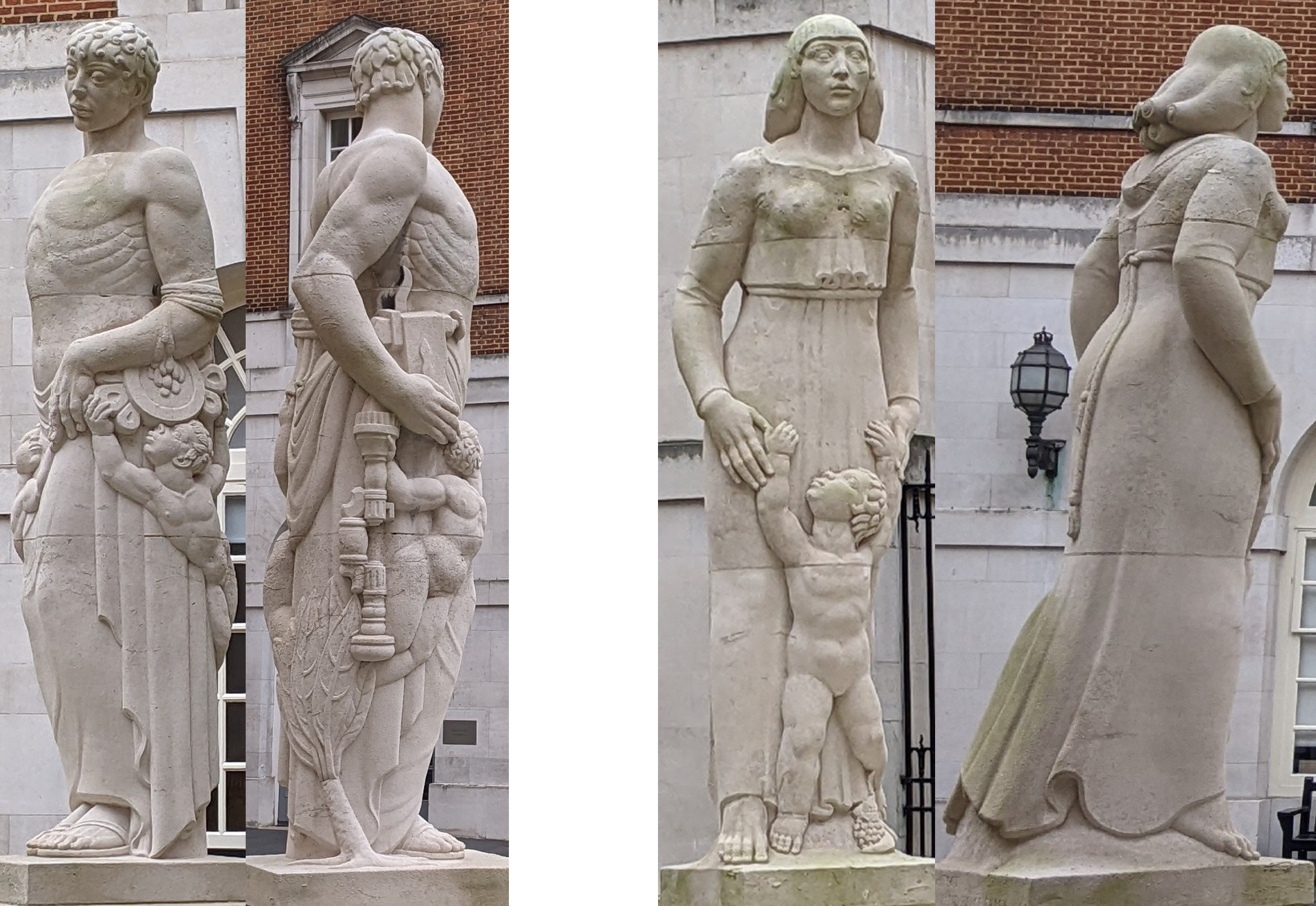
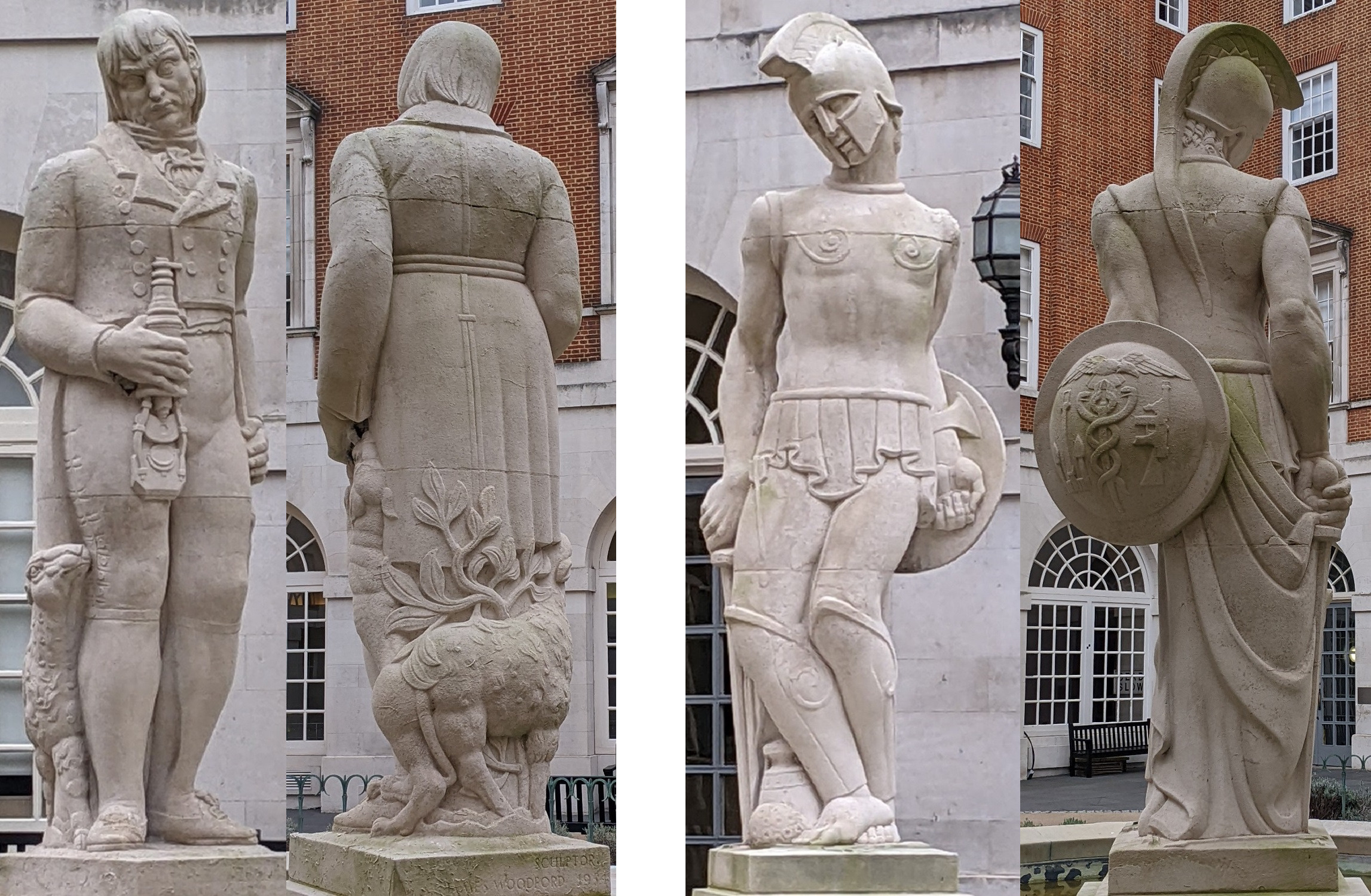
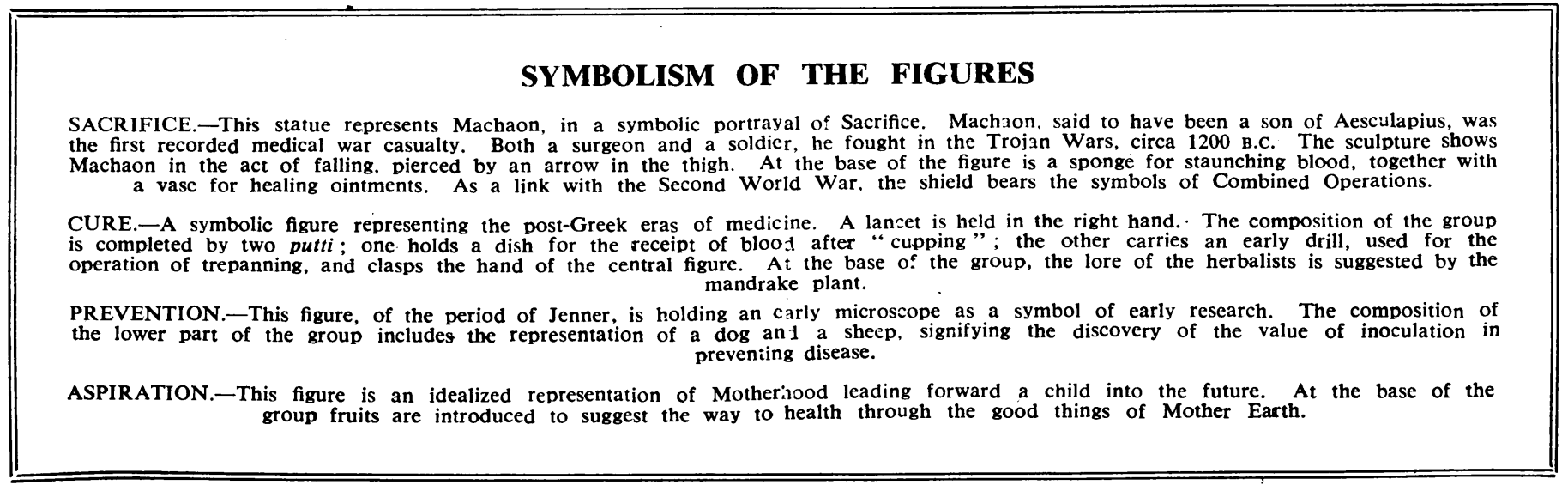
You can see the fountain and sculptures in detail during the London Open Gardens weekend in June
If you have viewed the exhibition, you will have seen how the Great Hall served several purposes over the years. Here is an extra one that didn’t make the final exhibition, the badminton court of the 1970s-80s, in between events of course. The badminton net is removed, but you can see the lines on the ground:

If you are interested in learning more, or visiting the archive, please get in contact with BMAArchive@bma.org.uk.
We have recently added three new curated collections to our online catalogue:

Non-Clinical Professional Skills E-books

Health Services Management E-Books

All three of these new curated collections, as with all of our others, are intended to make it quicker and easier to browse and access the titles that are available in our e-resource collections on particular topics. Please note that the collections do not cover all of our holdings. If there is specific title that you wish to access we recommend entering it into to the search box on the home page of our online catalogue.
All of our e-resources are accessible to all current BMA members regardless of what stage they are in their medical career.
If you have any comments or feedback about any of these three new curated e-collections please email us: bma-library@bma.org.uk

We’re excited to introduce the Springer Nature Medicine eBook Collection, now available to all BMA library members!
This comprehensive collection includes over 3,000 eBooks published between 2021 and 2024, carefully curated to support clinicians, researchers, educators, and medical students at every stage of their careers.
The collection covers a wide range of topics, including Surgery, Oncology, Neurology, Cardiology, Dermatology, and more. Whether you’re preparing for exams, refreshing your skills, or exploring a new specialty, these resources are here to help.
Start exploring today by visiting the Springer Nature Medicine eBook Collection (https://bma.primo.exlibrisgroup.com/discovery/collectionDiscovery?vid=44BMA_INST:44BMA&collectionId=8165597400006796&lang=en).

If you have any comments or queries about this new eBook collection, please email: bma-library@bma.org.uk

We provide all BMA members with access to both the Medline and Embase databases on the Ovid platform.
We have enhanced the Full Text availability options for articles that appear in the list of search results on these databases. You will now find that for each article that appears in the list of search results one of the following three full text option links will appear.
Access full text now
This link appears next to the articles that are available to access immediately, free of charge because they are published in e-journals that we subscribe to.
Free Full Text
This link appears next to the articles that are open access, the e-journals they are published in have been made freely accessible online.
Get full text for free
This link enables you to directly place a request for a free digital copy of the article via our new RapidILL service. Articles requested via this service are delivered directly to you via email, often within as few as three hours.
If you have any comments or queries about our Ovid Medline and Embase service, or full text availability of articles, please get in touch with us: bma-library@bma.org.uk
 BMA library and archive blog