
Exploring the Archives: Mental Health and the British Medical Association, 1860-1941
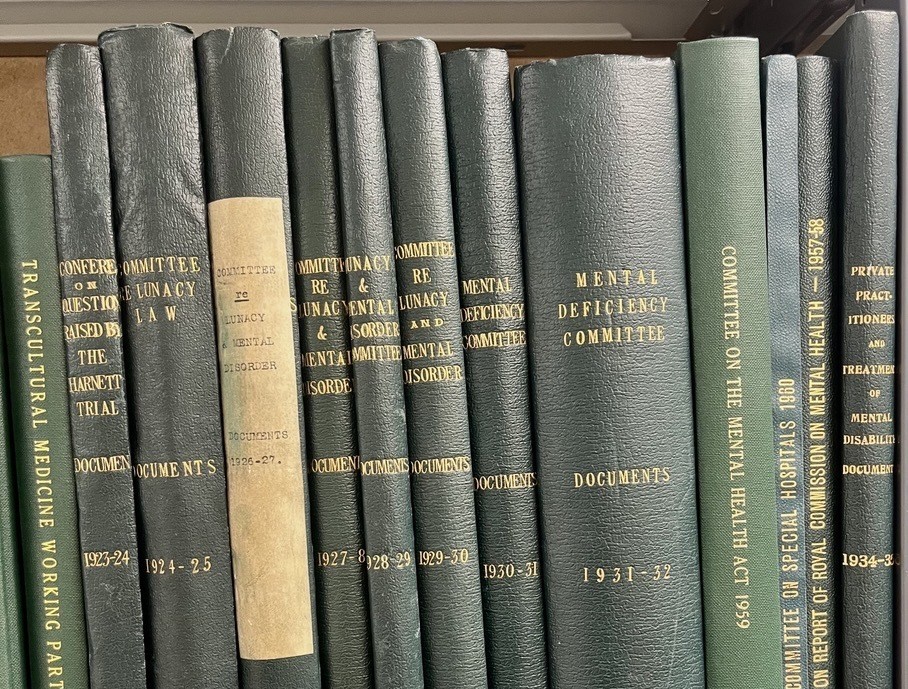
To mark mental health awareness week (11-17 May), BMA library and archive have explored mental health in the late 19th and early 20th century. What we have uncovered includes committees, members and activities that demonstrate the Association’s role in developing mental health law, treatment and advocacy in the UK.
Content warning
This blog includes references to and images of historical records concerning mental health prior to the 1940s. Some of the records contain outdated and sensitive language and themes reflective of the period covered.
Mental Health in the Late 19th Century
The 19th century marked a transformative time for mental health care, both in practice and in public perception. Earlier approaches included methods of custody, confinement, restraint and punishment, with care for individuals typically falling to families, workhouses or prisons.
In the late 1800s there was a shift towards a moral treatment system which aimed to treat people with mental health conditions as rational beings deserving of humane care. This was coupled with legislative change in 1845 that placed responsibility for the care of people with mental health conditions onto local authorities, requiring the provision of purpose-built institutions.
Key mental health reformers of the 19th century include Harriet Martineau (1802-1876), Samuel Tuke (1784-1857) and John Conolly (1794-1866), whose work helped move mental health care towards more compassionate and structured practices. John Conolly was a member of the British Medical Association.
British Medical Association Committee of Council, Physiology and Psychology Section
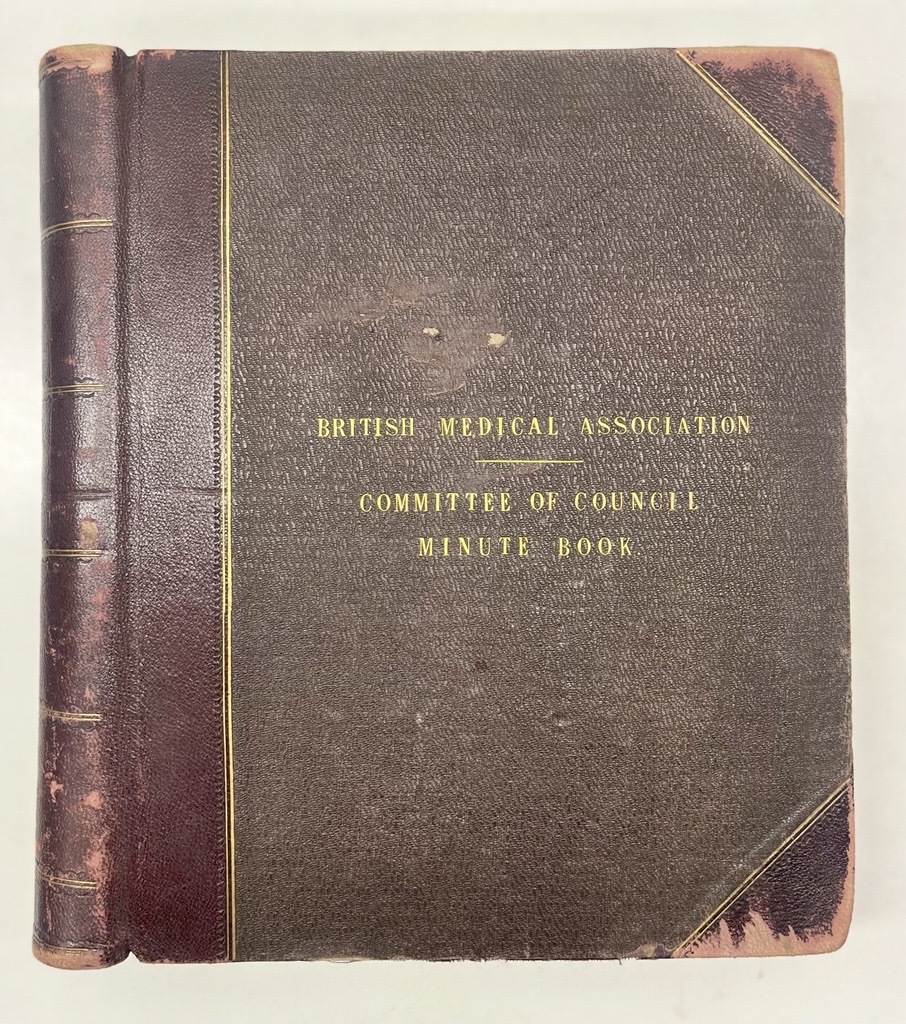
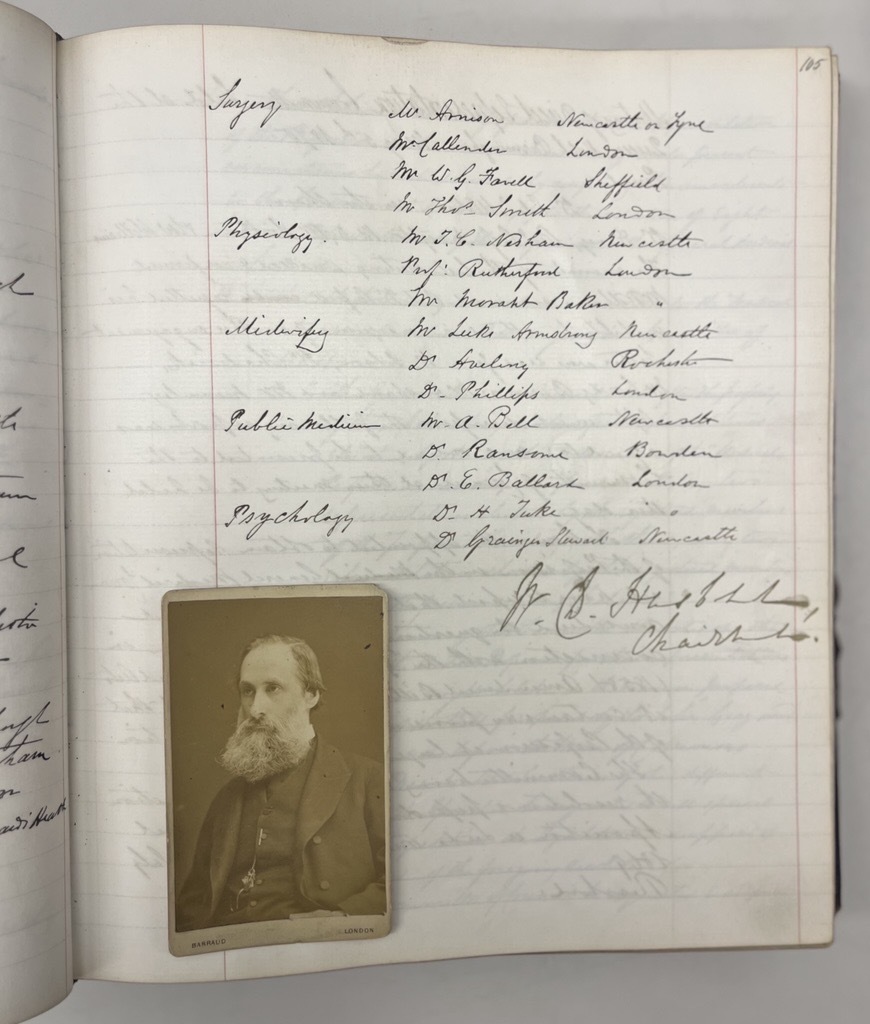
Evidence of the BMA’s early involvement in the field of mental health can be found in a Committee of Council minute book, 1868-1875. The Committee of Council managed BMA affairs between annual meetings of the Council. Included in the minutes are references to sections of the committee including medicine, surgery, physiology, psychology, midwifery, publications. Each section included an appointed president, vice presidents and officers. The Physiology and Psychology section brought together influential 19th century figures in mental health including:
Daniel Hack Tuke (1827-1895)
leading figure in mental health care and a descendant of the Quaker family who founded the York Retreat, a pioneering place opened in 1796 for the treatment of people with mental health needs. Tuke initially trained as a solicitor before turning to medicine. After studying at York Hospital, St Bartholomew’s and Heidelberg (M.D. 1853), he established himself in London as a specialist in mental disease. By 1875 he was lecturing at Charing Cross Hospital, later serving as a governor of Bethlem Hospital and becoming President of the Medico-Psychological Association in 1881.
Henry Maudsley (1835-1918)
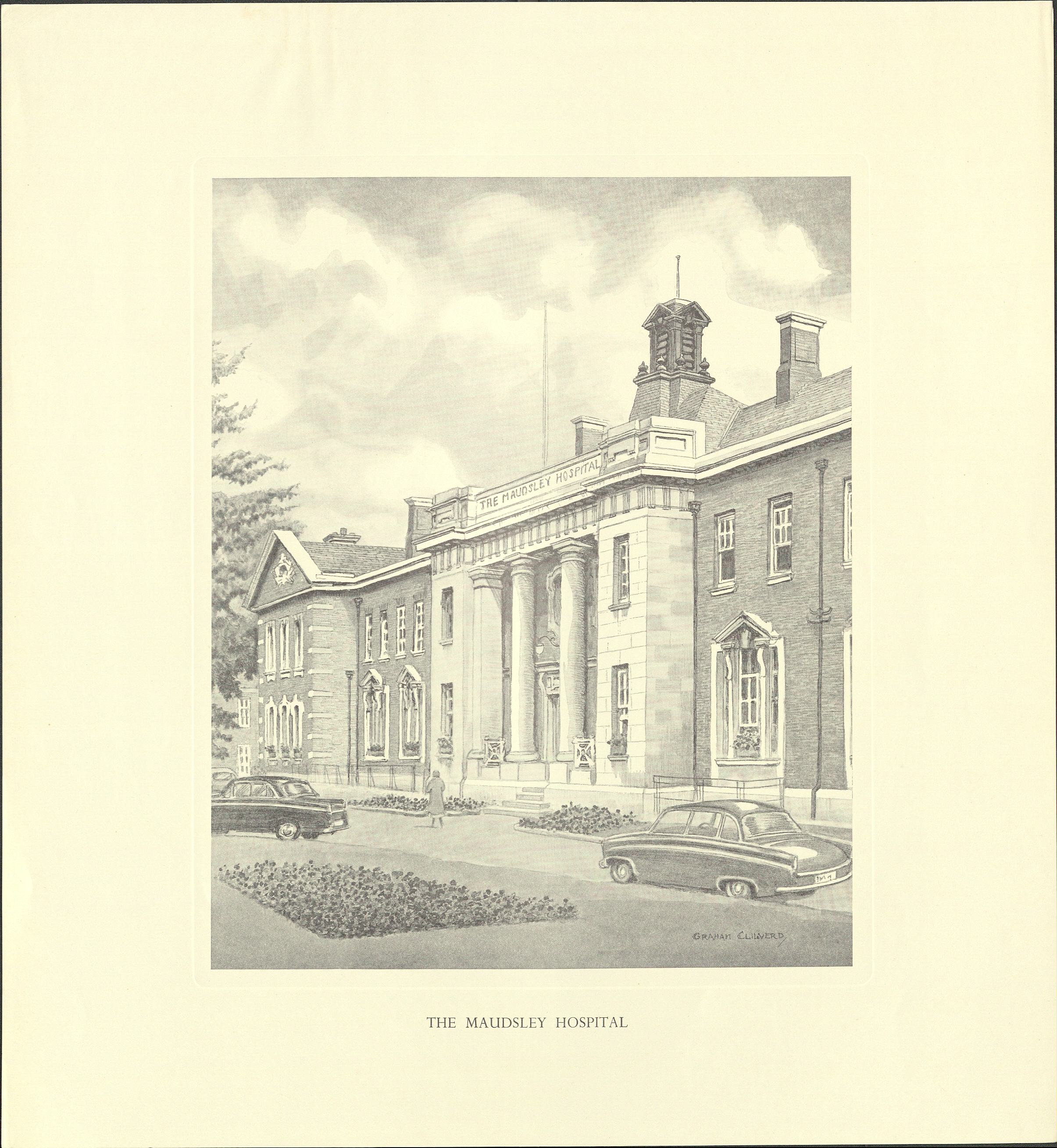
prominent psychiatrist who founded the Maudsley Hospital. After graduating M.D. in 1857, he spent time working in both the West Riding Asylum in Wakefield and the Essex County Asylum. In 1865 he became a physician at the West London Hospital. In his later years, he donated funds to London County Council to establish a new mental hospital treating early mental disorder in outpatients as well as inpatients. The hospital opened in 1923 after Maudsley’s death.
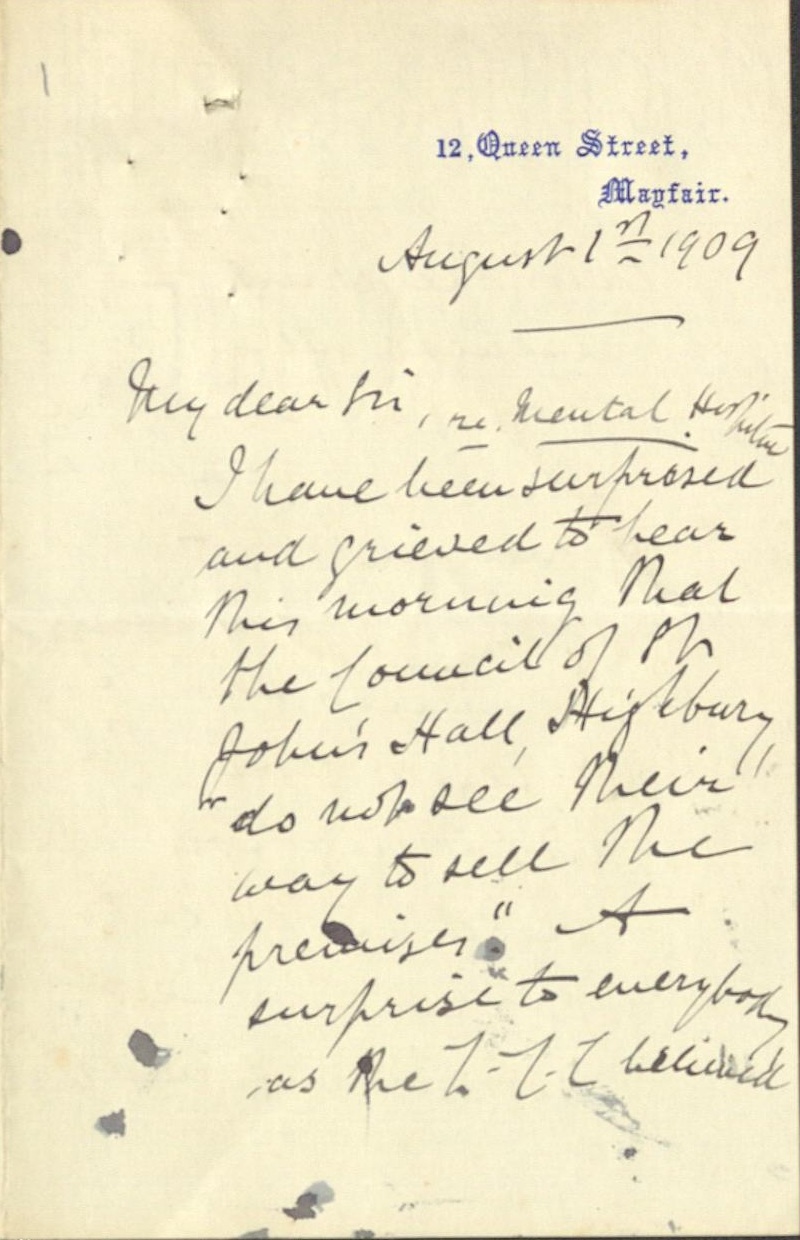
Reforming 19th Century Mental Health Law
By the end of the 19th century, mental health law in England and Wales was shaped by the Lunacy Acts of 1845 and 1890. The 1845 Act established the Lunacy Commission and required local authorities to maintain institutions for those with mental illness. The 1890 Act consolidated the earlier law, reinforcing local authority responsibilities and tightening procedures for patient admission and detention.
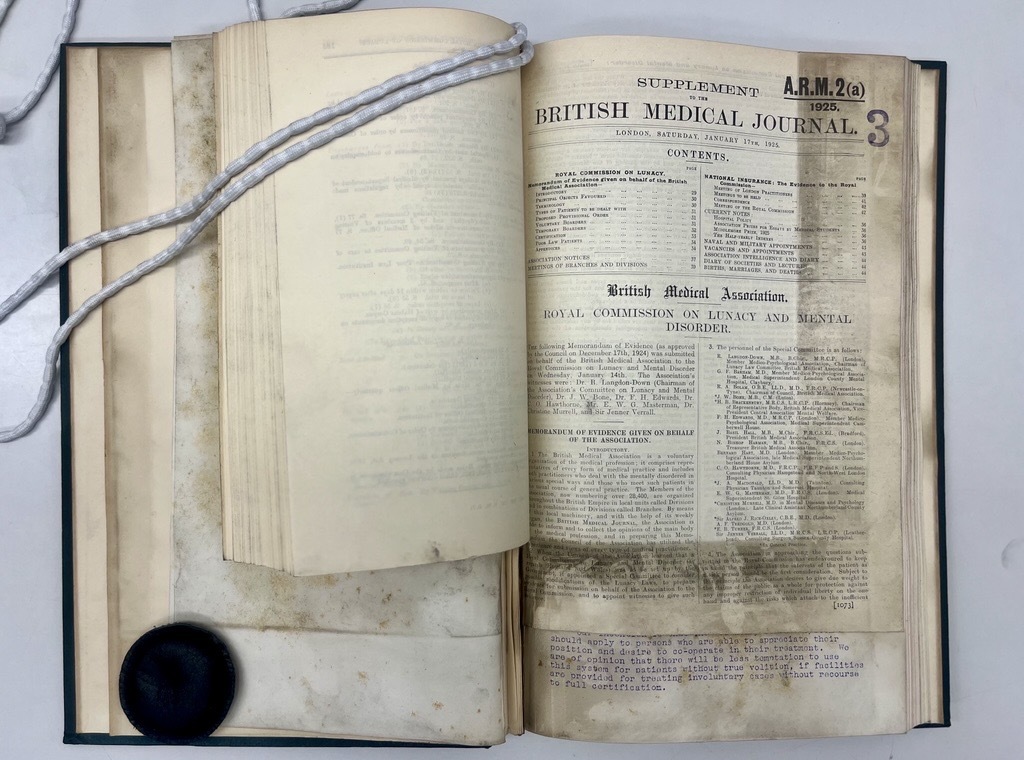
In 1924 The Royal Commission on Lunacy and Mental Disorder was set up by the government to review the existing laws and systems for the care and treatment of people with mental illness in England and Wales, examining how mental health services were operating under the current Lunacy Act 1890.
In response to the Royal Commission on Lunacy and Mental Disorder, the British Medical Association appointed a special committee (1924-1930) to consider possible modifications to the lunacy laws.
The key recommendations of the committee included:
Terminology reform: any future act be called mental disorders act and the words lunatic and pauper should be replaced with words such as mental abnormality, mental deficiency, mental disorder and mental ailment
Promoting voluntary treatment: expanding provisions for patients to receive care without compulsory legal processes
Flexibility in care settings: supporting a range of treatment environments, including hospitals, licensed houses, and charitable homes
These recommendations directly influenced the Mental Treatment Act of 1930, that allowed voluntary outpatient treatment for mental illness, replacing the use of existing terminology and marked a significant shift in patient rights and mental healthcare.
Investigating Psychoanalysis
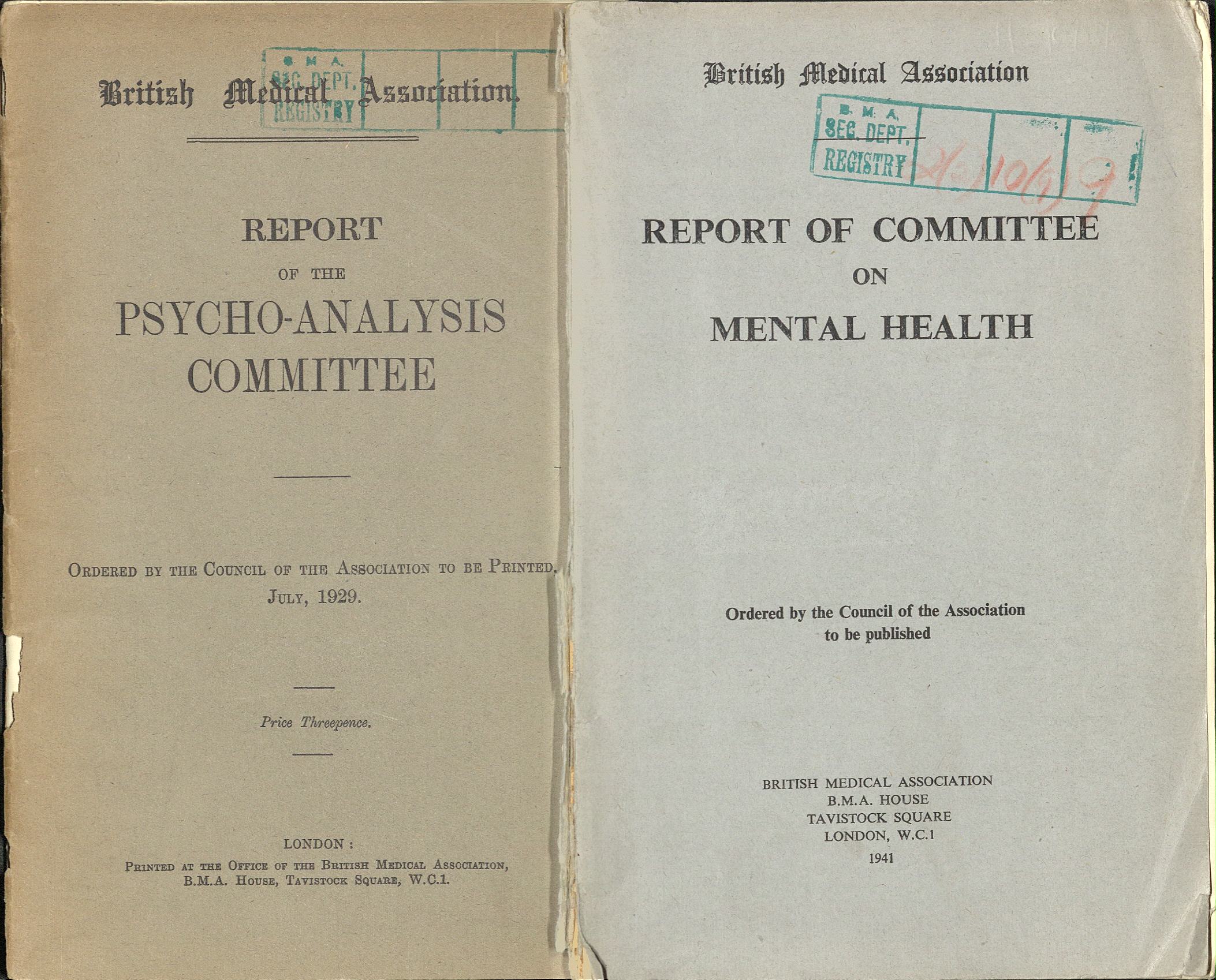
Between 1926-1929, the BMA Council appointed a Psychoanalysis Committee to investigate and report on the growing field of psychoanalysis related therapies.
The committee investigated other methods of psychotherapy, psychoanalytical theory and practice and misconceptions and criticisms concerning psychoanalysis.
In their investigation the committee concluded that the claims of its advocates and the criticisms of those who oppose it must as in other disputed issues, be tested by time, by experience and by discussion.
Report of the Psycho-Analysis Committee, ref H/120/1/4
Mental Health Committee
In 1938 the BMA Council appointed a Mental Health Committee. The aim of the committee was to enquire into and report upon the present medical equipment and provision for dealing with mental health, with reference to the problems of treatment of the psychoneurotic and allied disorders.
In its first years the committee covered topics such as psychoneurosis arising from industrial injuries, the instruction of medical students in psychology and psychological medicine and model scheme for the treatment of mental illness proposed by the committee.
The conclusions of the committee in a 1941 report include:
- The incidence of mental illness in the population is much greater than can be met by the present facilities for treatment
- The number of doctors trained in psychological medicine should be increased
- Education around mental health should be improved at various life stages
- There is a demand for appropriate accommodation for both in patient and outpatients
- That more facilities should be afforded to train all nurses and especially mental nurses in psychological conditions.
Psychological Medicine Group
In 1937 the BMA established a Psychological Medicine Group.
The aim of the group was to bring into closer contact with the general body of medicine the needs of those engaged in the practice of psychological medicine. The group committee consisted of elected members subject to the council of the association.
In later years this committee covered mental health and therapy during the Second World War, the introduction of new drugs for treatment of mental health conditions and the move towards community led mental health care.
All records sourced in this blog can be found in the BMA archive. To investigate this history further or consult additional records relating to the BMA and mental health please send an enquiry to bmaarchive@bma.org.uk. To find out more about current BMA initiatives relating to Mental Health head over to the BMA website.
To find out more on historic mental health, institutions and treatment
British Medical Association Collection held at Wellcome Collection. Ref SA/BMA
The National Archive research guide on asylums, psychiatric hospitals and mental health

