

We provide all BMA members with access to both the Medline and Embase databases on the Ovid platform.
We have enhanced the Full Text availability options for articles that appear in the list of search results on these databases. You will now find that for each article that appears in the list of search results one of the following three full text option links will appear.
Access full text now
This link appears next to the articles that are available to access immediately, free of charge because they are published in e-journals that we subscribe to.
Free Full Text
This link appears next to the articles that are open access, the e-journals they are published in have been made freely accessible online.
Get full text for free
This link enables you to directly place a request for a free digital copy of the article via our new RapidILL service. Articles requested via this service are delivered directly to you via email, often within as few as three hours.
If you have any comments or queries about our Ovid Medline and Embase service, or full text availability of articles, please get in touch with us: bma-library@bma.org.uk
You can now access a new curated collection that allows you to browse our e-journals by medical specialty.

This new curated collection is organised according to the medical specialties that we have registered for our c.200,000 members:

We hope that this new curated collection will make it easier to find and access the e-journal titles that are relevant to you.
If you have any comments or queries about this new curated collection please email: e-journals@bma.org.uk
You can now access an updated curated collection that allows you to browse our e-books by medical specialty.

This revised collection is organised by medical specialty domains:
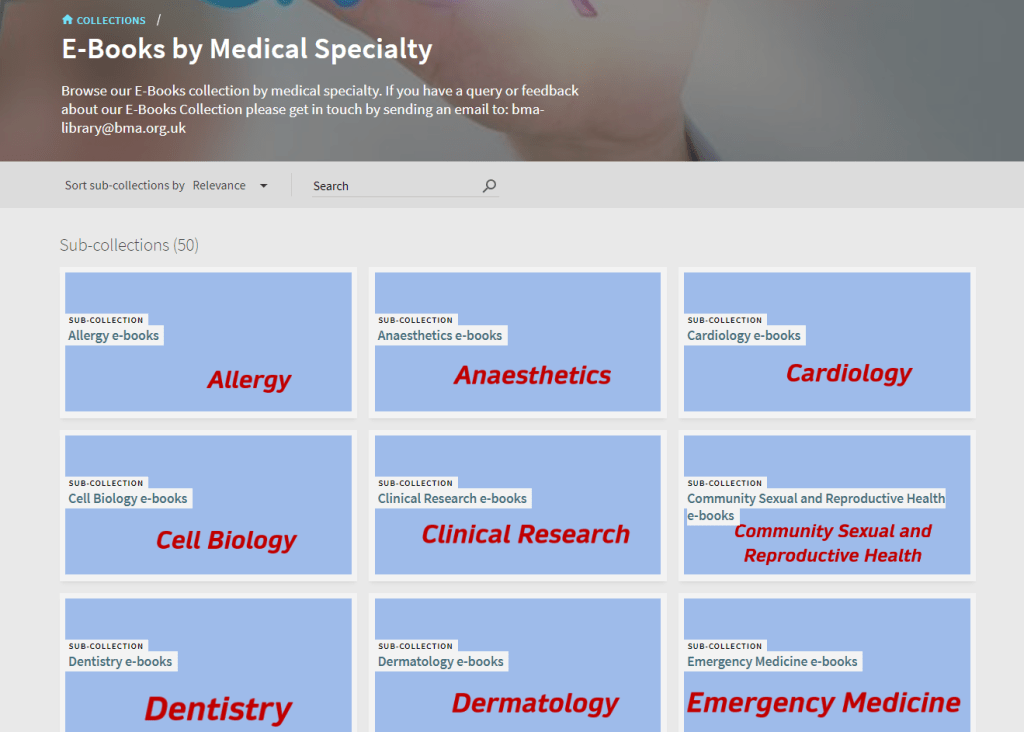
The sub-collections for Paediatrics, Psychiatry, and Surgery each contain further sub-collections for more specific specialties. For example:
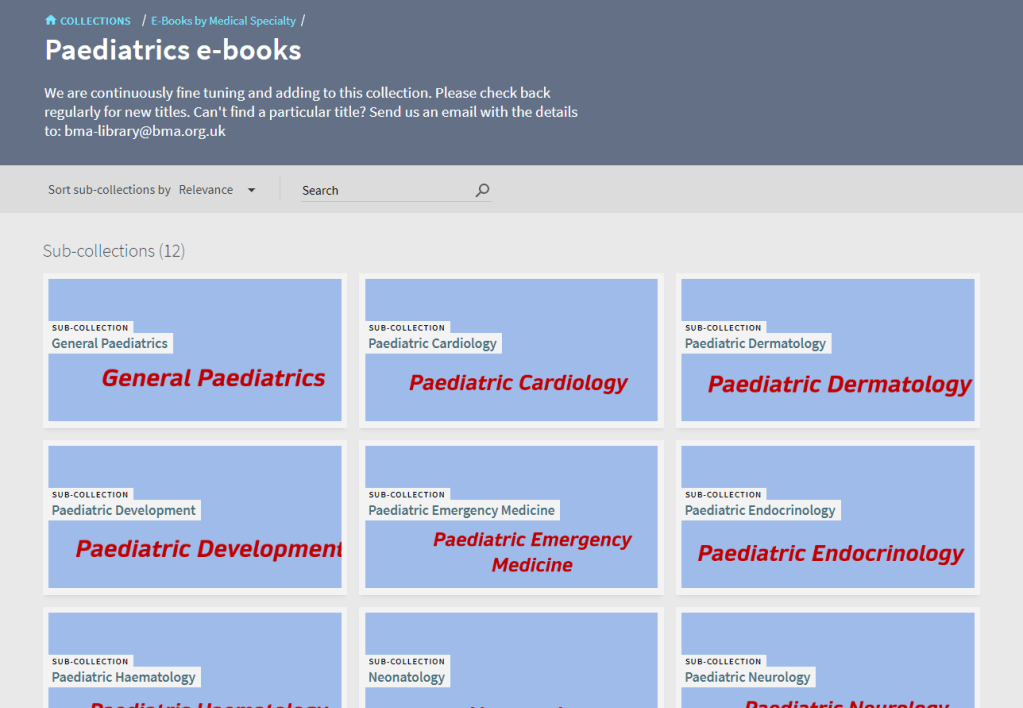
We hope that this new curated collection will make it easier to find and access the e-book titles that are relevant to you.
If you have any comments or queries about this new curated collection, please email: bma-library@bma.org.uk
Looking for an article or chapter that is not held by the BMA Library? We understand how frustrating it can be to scour the web in vain for articles of interest, only to be faced with barriers and paywalls. Not to worry – a new addition to our services can help supercharge your search for full-text access.
With your BMA membership you now have access to Rapid ILL, a document delivery tool that can locate articles from a wide range of books and journals. It is a speedy service integrated into the library catalogue, and completely free with your membership.
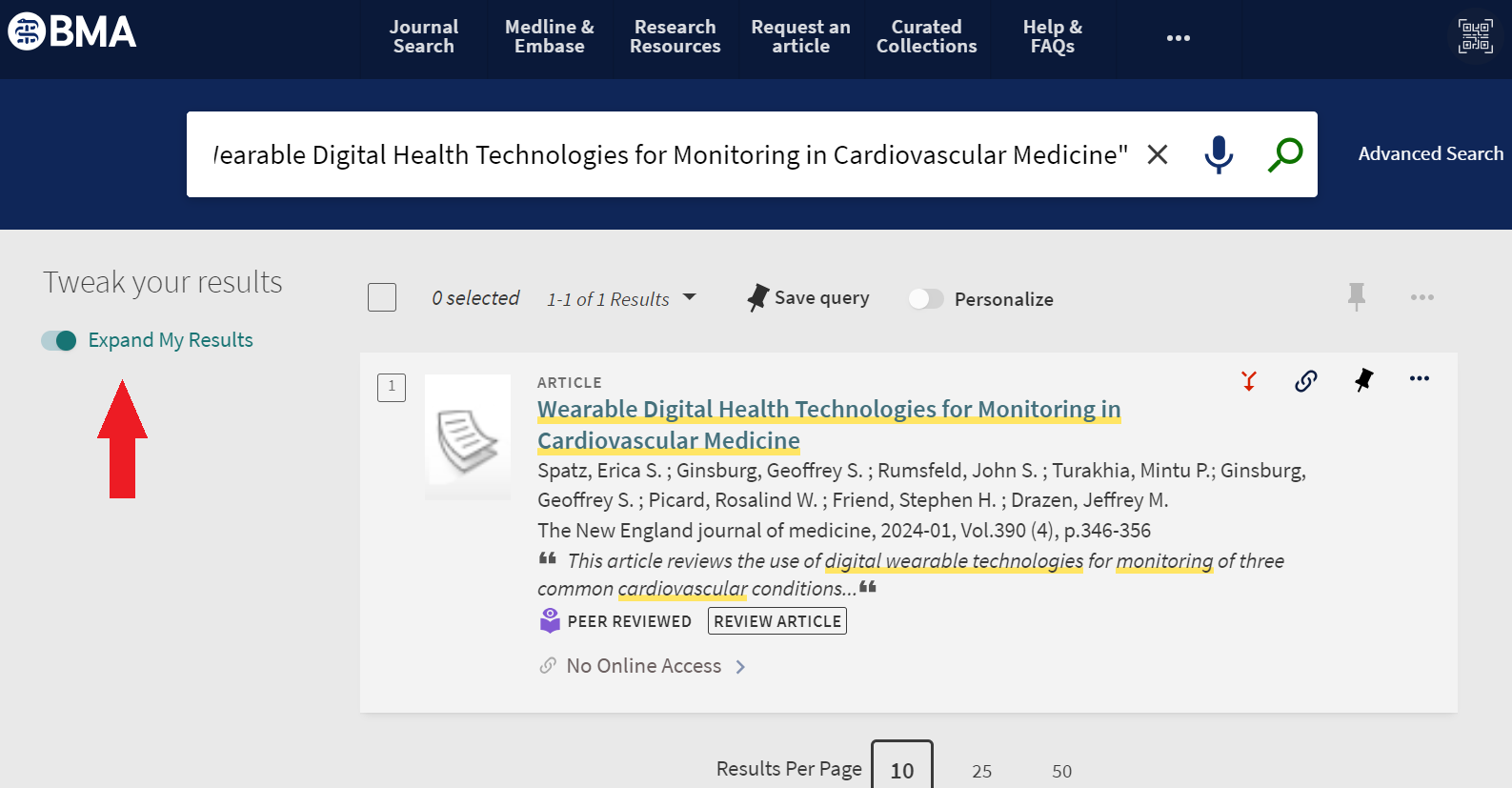
To use this service toggle the ‘Expand My Results’ option, located to the side, when searching for an article on our catalogue. If you do not do this, you will only be displayed results from the BMA’s holdings.
This video provides a great overview of how to request an article through the service:
‘Expand My Results’ opens the search up to a much wider global index, featuring a range of records from journal articles, book chapters, conference abstracts and more. Articles that appear through this method will display a grey hyperlink stating ‘No Online Access’, but don’t be discouraged, as clicking this link will direct you toward placing a Rapid ILL request.
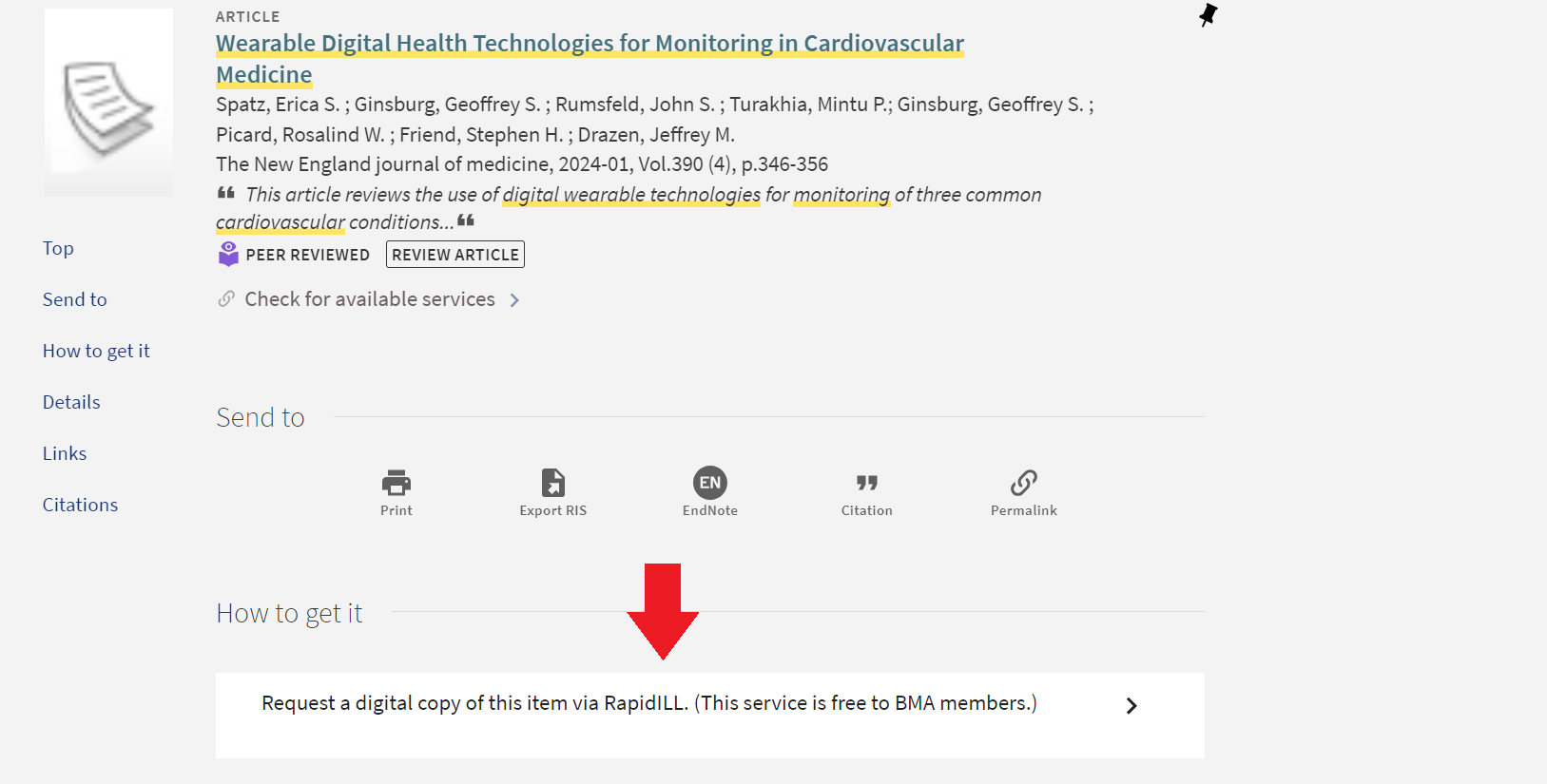
The option for doing so will be under the ‘How to get it’ heading. If you are not signed in, you will be prompted here to do so. By clicking ‘Request a digital copy via Rapid ILL’, you will open a pre-populated form featuring the item’s bibliographic details. You should not have to edit any of the details here, but if required fields are empty (marked with an *), you have the option of making changes.
Once you agree to the terms and conditions, you can submit the request. This request will be sent to the wider Rapid ILL network. Digital copies can often be supplied within 6 hours, and certainly most requests will be fulfilled within 72 hours, for harder to source content.
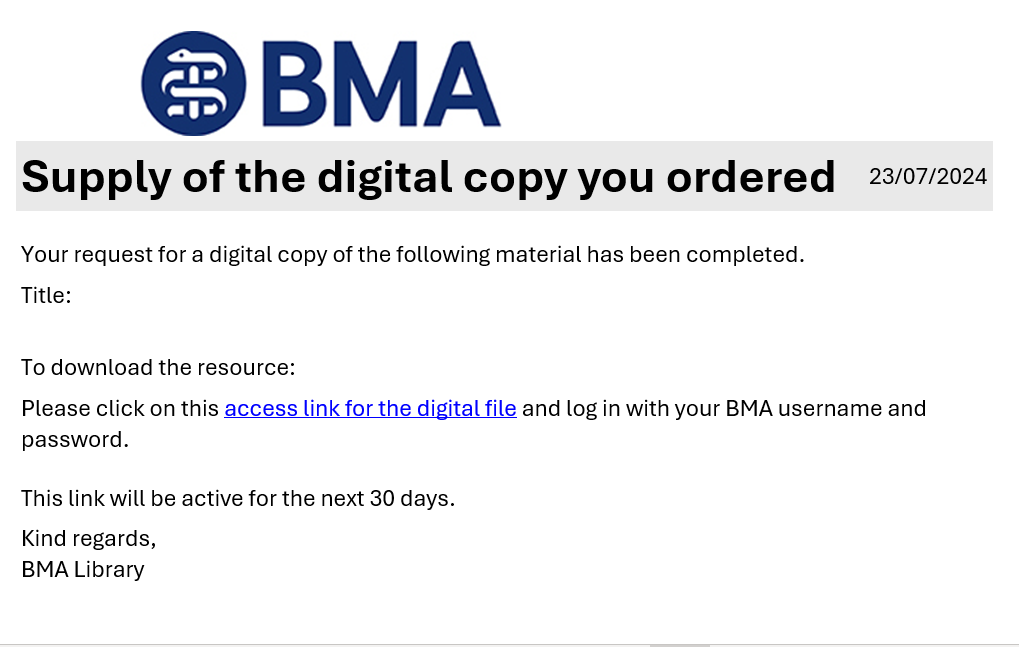
When the article is ready, you will be notified via email. This message will include a link to download the article. Follow the link and sign in with your BMA username and password.
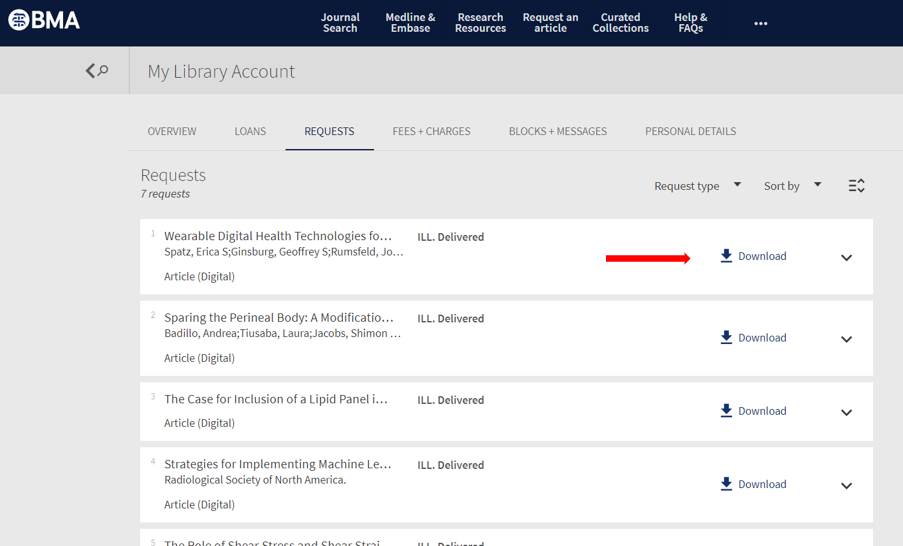
This will take you to the ‘My Requests’ page of your library account. Find the item here and click the ‘Download’ button next to the title. This will download a PDF copy of your document.
As per the terms of the copyright agreement, the downloaded document must be saved in a secure location. You can print if you wish, although you are not permitted to make further copies.
For further information on copyright restrictions as they pertain to our library service, please see our Copyright Simplified document.
We hope that you will find the service a useful addition to your research toolkit. Please do let us know your thoughts at bma-library.bma.org.uk.
16 May 2024 is Global Accessibility Awareness Day (GAAD). Find out more by following the link https://accessibility.day/
The purpose of GAAD is to get everyone talking, thinking and learning about digital access and inclusion; as an e-only Library it is key that our resources are as accessible for our users as possible.
Primo, the library catalogue searching tool is continually designed and developed to meet Level AA of the Web Content Accessibility Guidelines (WCAG 2.1) and Section 508 of the US Rehabilitation Act for features and functions.
Accessibility doesn’t stop there; with resources available from a variety of platforms accessibility does vary per publication however they all meet Level AA with many chapters, books and articles viewable online and as downloads adaptions can be made to suit you.
such as changing contrast, read aloud and adapting font size.
ClinicalKey is available in languages other than English.
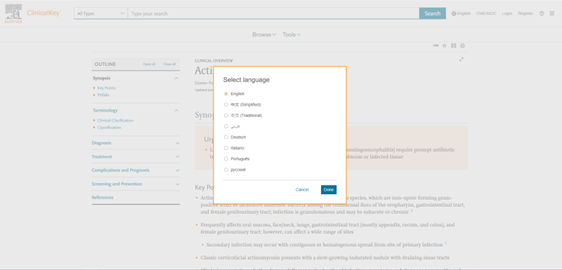
Access ClinicalKey here: https://www.bma.org.uk/bma-library-and-archive/clinicalkey
In addition many platforms allow you to highlight and make your own notes to refer back to.
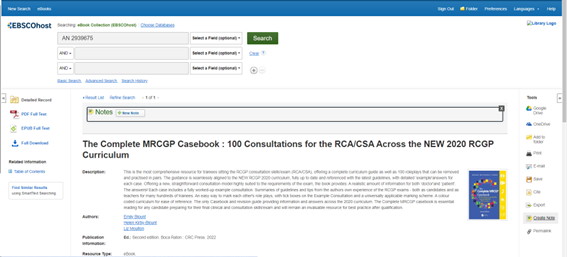
Search the library catalogue here: https://bma.primo.exlibrisgroup.com/discovery/search?vid=44BMA_INST:44BMA
The BMA website is also designed to meet these guidelines – find out more here: https://www.bma.org.uk/accessibility
If you want to quickly and easily see the new titles that have been added to our e-journal collection, or which e-journals are the most popular with BMA members, we have the following two curated collections to help you achieve this.
New E-Journals
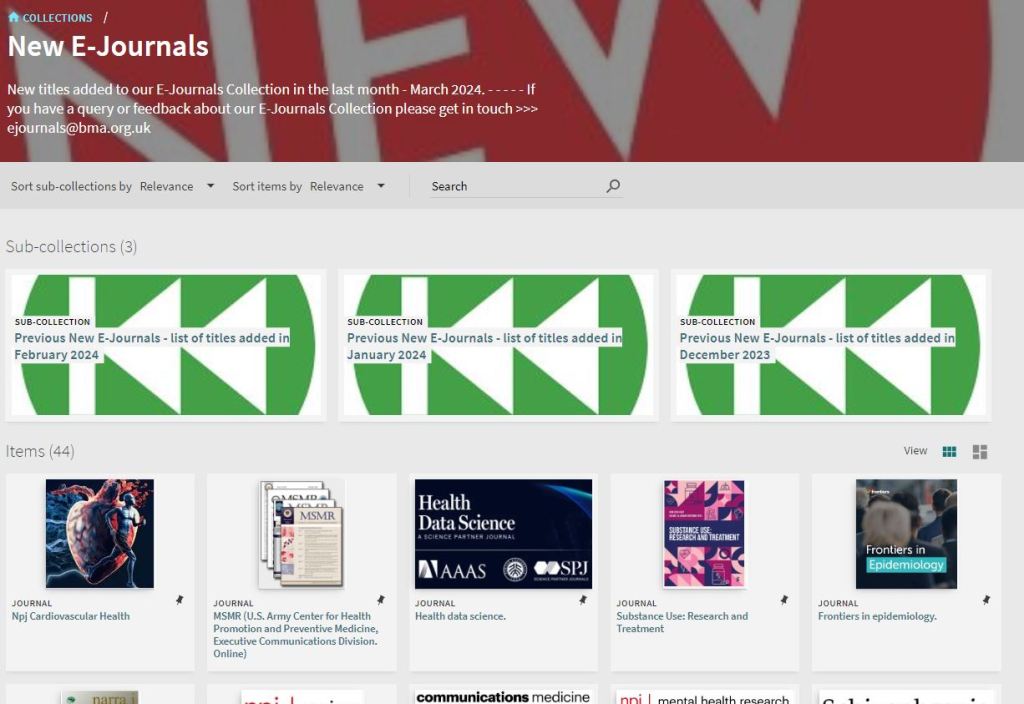
The New E-Journals curated collection brings together all of the titles that we have added to our collection in the previous month. You can also find three sub-collections, one for each of the preceding months, allowing you to rapidly browse and access all of the e-journals we have added in the last four months:
Top 20 E-Journals
We also have a Top 20 E-Journals curated collection which, as the name suggests, displays the 20 most accessed titles in our e-journal collection.
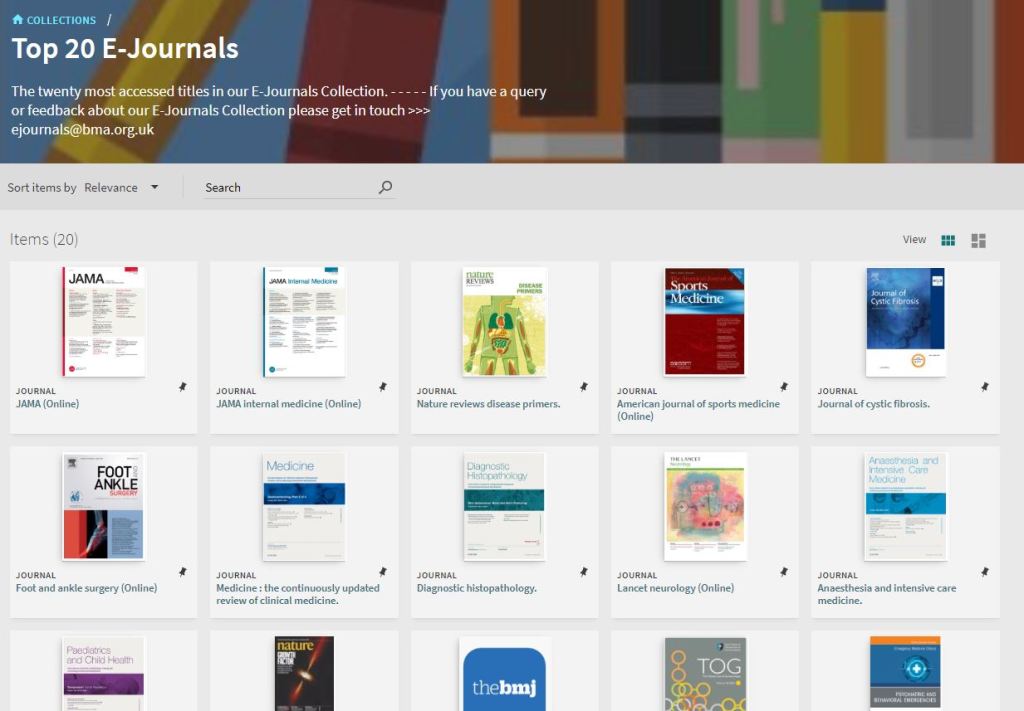
Both collections include direct access links to each title, allowing you to quickly access the e-journals.
If you have any comments or queries about either of these two new curated collections please email: e-journals@bma.org.uk
Today, to mark International Women’s Day, we would like share the stories of Dame Josephine Barnes, the first female president of the BMA (1979-1980), and Dr Christine Murrell, the first female member elected to council (1924-1933).
Dame Josephine Barnes
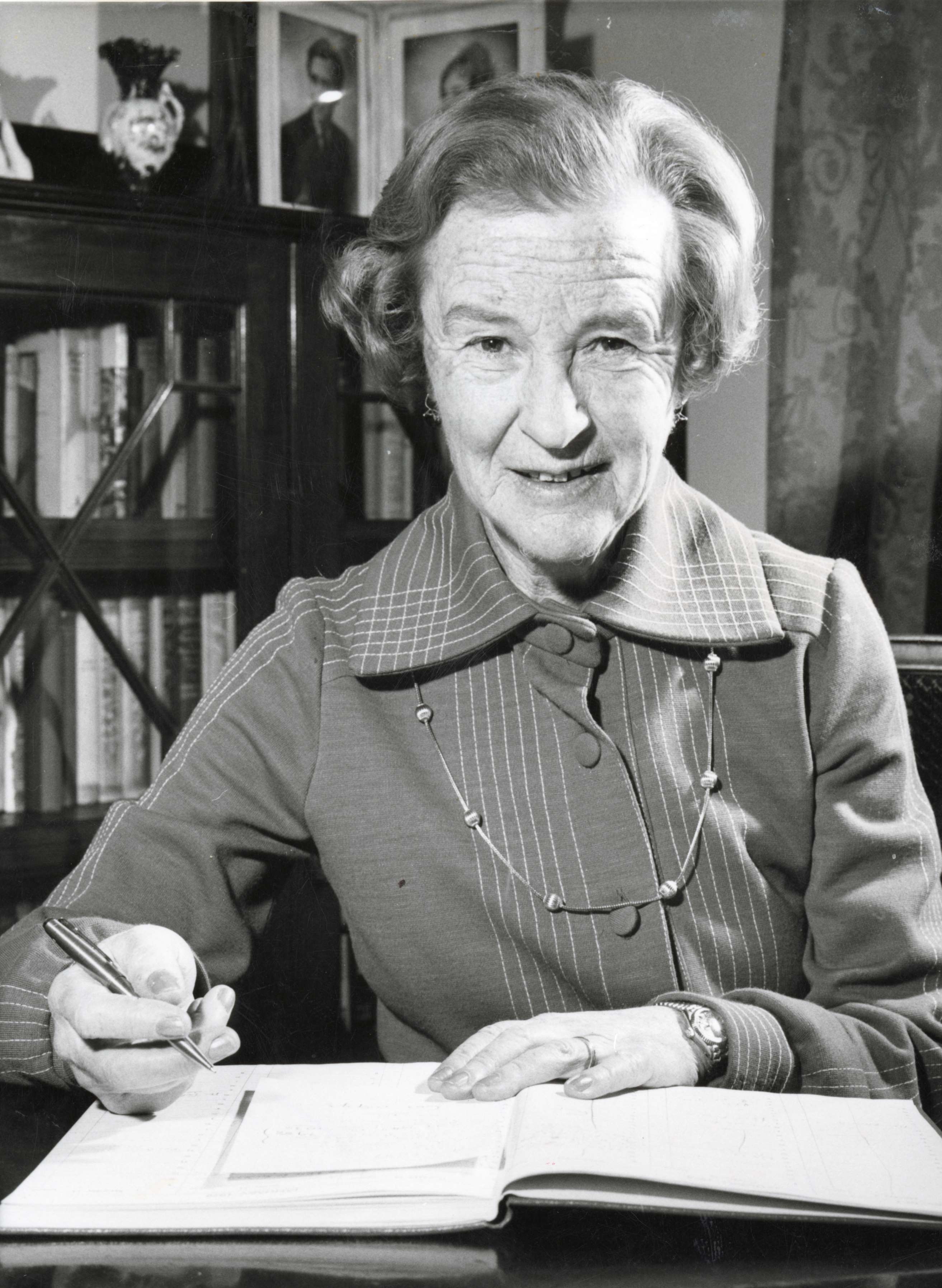
The career of Dame Josphine Barnes:
Dame Alice Josephine Mary Taylor Barnes (18 August 1912-28 December 1999) was a leading obstetrician and gynaecologist and played a fundamental role in advocating for better women’s reproductive welfare, as well as being a leading ambassador of family planning and an invaluable supporter of the 1967 Abortion Bill.
Barnes graduated with first class honours in physiology, from Oxford University. She subsequently undertook her clinical training at University College Hospital. She was also the recipient of the Goldschmid scholarship for clinical studies, which at the time, was only offered to 12 women a year. Barnes qualified in 1937 with UCH medals and prizes, with a particular focus on obstetrics and gynaecology.
Barnes had a long and illustrious career and received numerous accolades, awards and held many highly sought after positions- too many to list in this blog post!
Here are just some of the highlights of her extensive career:
- Appointed obstetrics and gynaecology consultant at Elizabeth Garrett Anderson Hospital, 1947
- First female obstetrician and gynaecologist consultant at Charing Cross Hospital, 1954
- Served on the Royal Commission on Medical Education and sat on the boards of the Royal Free Hospital, Medical Women’s Federation and Medical Defence Union, alongside, chairing the medical committees of the Marie Curie and Elizabeth Garrett Anderson hospitals, 1960s
- Vice President of the Royal College of Obstetricians and Gynaecologists, 1974
- Undertook work on multiple national committees: Pain free labour (1947); Lane Committee (1971-1973) and Warnock Committee on In Vitro Fertilisation and Human Embryology (1982-1984)
Dame Josephine Barnes and the BMA:
Dame Josephine Barnes served as BMA President, 1979-1980, the 139th President of the Association. She is believed to have been a long-standing member. We can see that in the 1930s she sought guidance from the BMA, on military service, with the BMA advising her to serve and offer medical expertise to ‘the home front’. She subsequently spent the early 1940s as a resident medical officer at Queen Charlotte’s Maternity Hospital ensuring high quality maternity care persisted amidst the London Blitz, as well as taking charge of the emergency maternity annexe at Ruskin College (Oxford). The annexe was established for women evacuated from towns along the south coast.
The selection of Dame Josephine Barnes as President was a recognition of the incredible contributions she made to the medical sector, in particular in the field of obstetrics and gynaecology. Barnes’ work was celebrated on a number of occasions, through awards bestowed upon her by the BMA, as well as the commissioning of a portrait, that can be found in BMA House (opposite the room named after her).
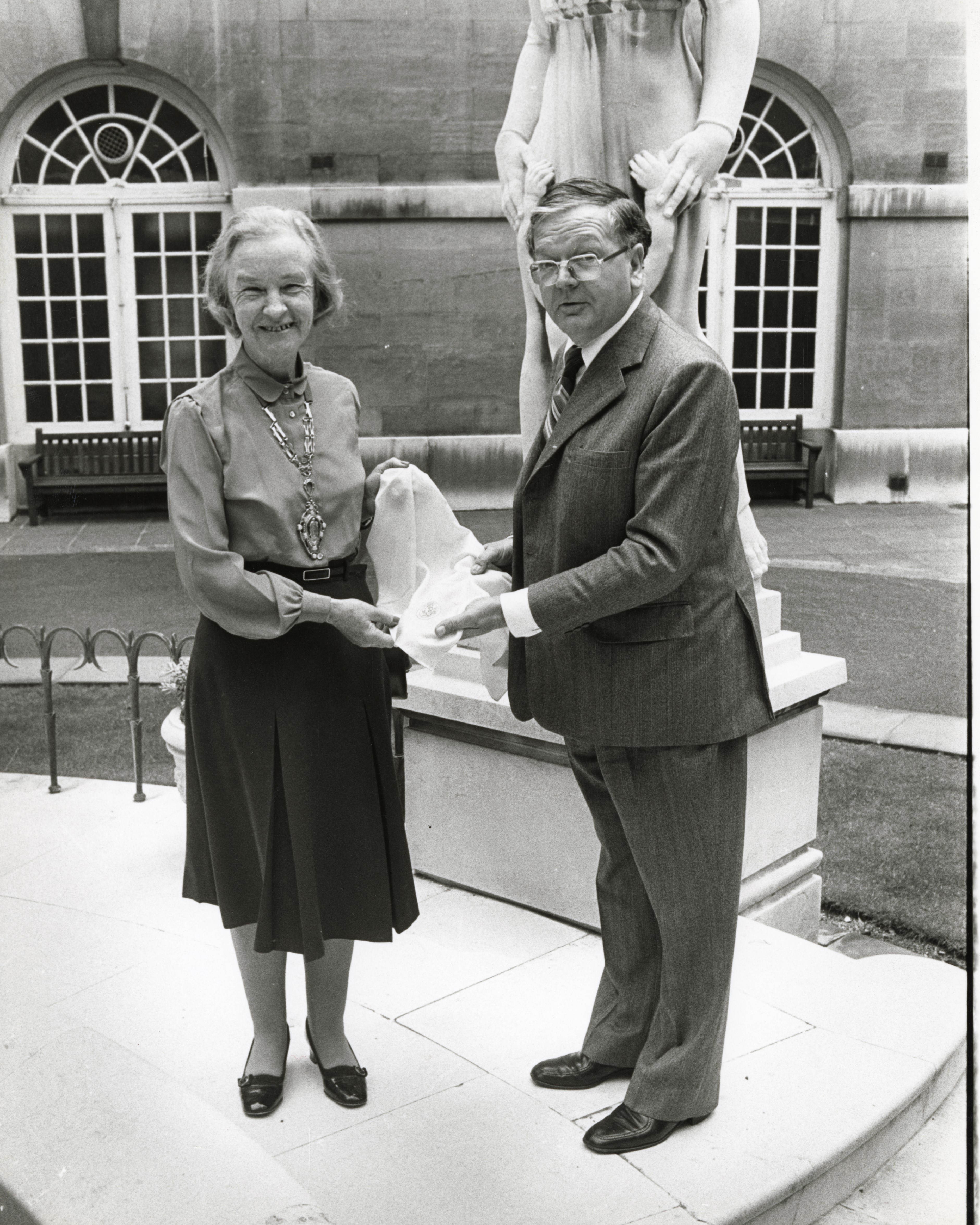

Barnes was a strong believer in the important advocacy role of the BMA, stating in her presidential speech:
“The British Medical Association represents not only all its members but all doctors. It must thus represent doctors in all fields of practice and it must continue as it has in the past to negotiate with the authorities for the best possible conditions of practice.”
Within this speech Barnes emphasised the importance of the establishment of the NHS, of which “its benefit to the community has been immeasurable”. The speech also highlighted the improvements needed in women’s medical services, particularly in relation to women’s experiences in pregnancy. In addition, within her speech she emphasised the need to consider how to create a more flexible working environment in the medical sector. Barnes implored, “serious consideration will have to be given to providing a career for women doctors which is compatible with their role as wives and mothers. This will inevitably necessitate changes in our present system of medical employments. There are many doctors both men and women who would prefer to work part-time in their chosen speciality…but the rigid structure at present imposed makes this extremely difficult and wasteful of talent.”
Overall Barnes commended the work of the profession and the developments of the NHS but stressed that there was more still be done and through her work as president intended to instigate further change and conversations.
Want to know more?
There is much more extensive information regarding Barnes’ illustrious career, including a desert island disc interview, 5 March 1989, and an in depth interview with Sir Gordon Wolstenholme, 6 June 1989:
Dame Josephine Barnes in interview with Sir Gordon Wolstenholme
Dr Christine Murrell
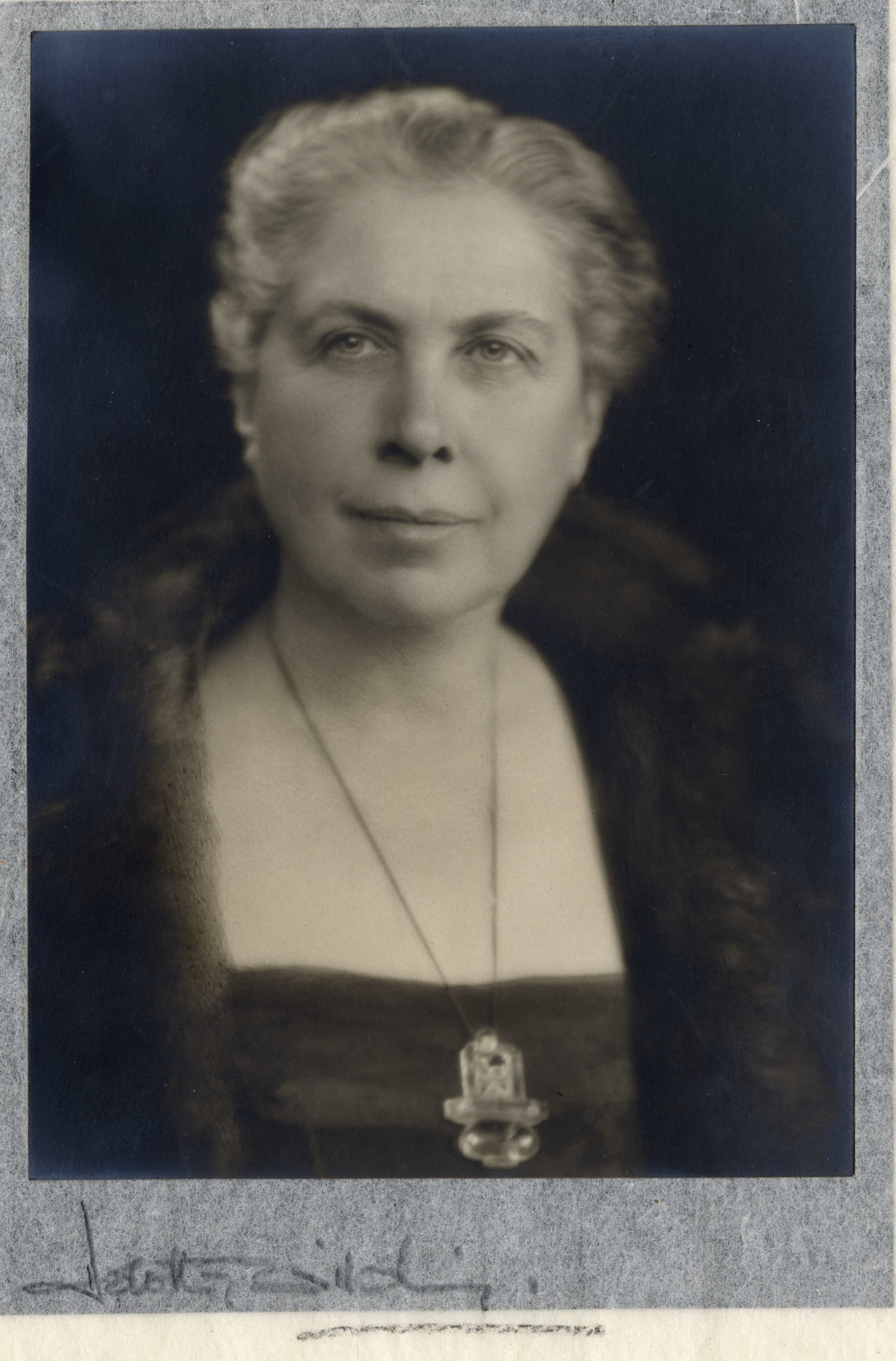
Dr Christine Mary Murrell (18 October 1874-18 October 1933) began her medical career at the London School of Medicine for Women and graduated with an MB BS in 1894. Her post-graduate medical career started as a house physician and medical registrar at the London Free Hospital, she also held an appointment at Northumberland County Asylum. This prompted her, in 1905, to obtain an MD in Psychology and Mental Diseases. Murrell subsequently set up a general practice with a fellow student from the London School of Medicine for Women, Honor Bone.
During the First World War she served as a medical officer to the F Division of the Metropolitan Special Constabulary and as the Chair of the Executive Council of the Women’s Emergency Corps. Alongside her BMA membership, she was also a member of the International Medical Women’s Association, served on the council of the Medical Defence Union and served as President of the Medical Women’s Federation between 1926-1928. In September 1933, Murrell was also the first woman elected to the General Medical Council, however, she sadly died, in October 1933, before taking her seat.
Murrell was also engaged in public matters and supported wider women’s political and welfare issues, including the suffragette movement.
Dr Christine Murrell and the BMA:
Dr Christine Murrell held numerous positions within the BMA during the early 20th Century, the most notable of which was her election to BMA Council in 1924, making her the first female member to be elected. She served on Council for nine years, until her death in 1933.
Murrell’s work with the BMA dated back to 1917. During the First World War, Dr Christine Murrell served as a representative for the Kensington Division at the ARM, which included the BMA’s centenary meeting in London. In 1928, Murrell was elected as President of the Metropolitan Counties Branch, the same branch that Dr Elizabeth Garrett Anderson (the first female member of the BMA) became a member of in 1873. Upon becoming president, Murrell delivered an address entitled ‘Our Changing Times’, the speech discussed the changing focus of the profession, with the increase of specialisms, and emphasised the need to keep the patient at the centre, to ensure the best possible care is delivered.
Alongside both her branch presidency and seat on Council, Murrell also found time to serve on a multitude of committees:
- Parliamentary Elections
- Ethical
- Public Health
- Medico-Political
- Journal
- Special committee for lunacy law and mental disorders
- Special Committee for anaesthesia in midwifery
- General medical services scheme
This demonstrates not only Murrell’s commitment to the activities of the BMA but also a desire to shape the future of the medical profession.
The Library’s Online Catalogue is BMA members’ one stop shop for accessing all of our online resources. All of our e-book and e-journal content can be easily searched for and accessed using the online catalogue.
First things first
We recommend that you start off by signing in to our online catalogue before you begin searching. Access to the full text of e-books and e-journals that we subscribe to is only available to current members of the BMA.
Searching for an article
Our online catalogue allows you to search directly for journal articles. Simply enter the title of the article you are searching for into the search box:
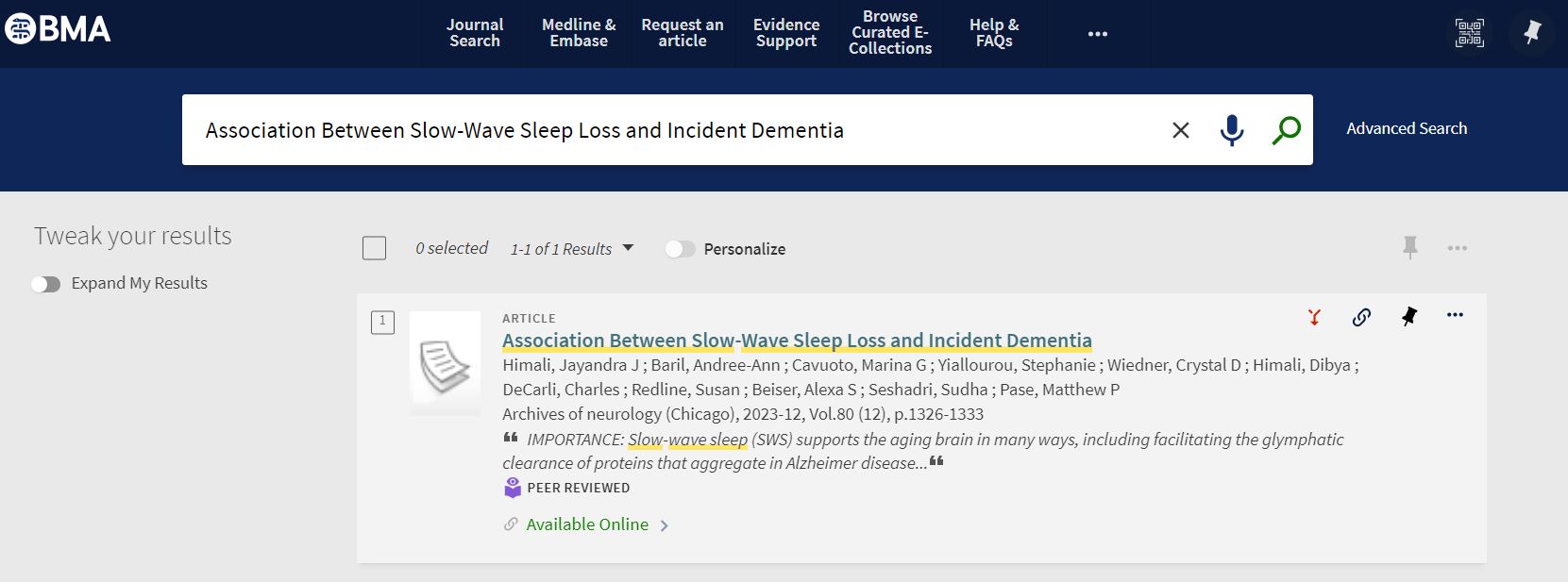
Provided the article is included in our central index, the catalogue entry to access the article will appear straight away. Please note that if you are searching for an article that was published pre 21st Century or only published in the last few weeks it is possible that it won’t yet have an entry in the index. If this is the case we recommend that you instead search for the e-journal that the article is published in…
Searching for a e-journal
To see if you can access to a particular e-journal please click on the Journal Search button, above the search box of the online catalogue home page, and enter the title of the journal you wish to access. As you start to type the journal title the catalogue will begin searching for it straight away:
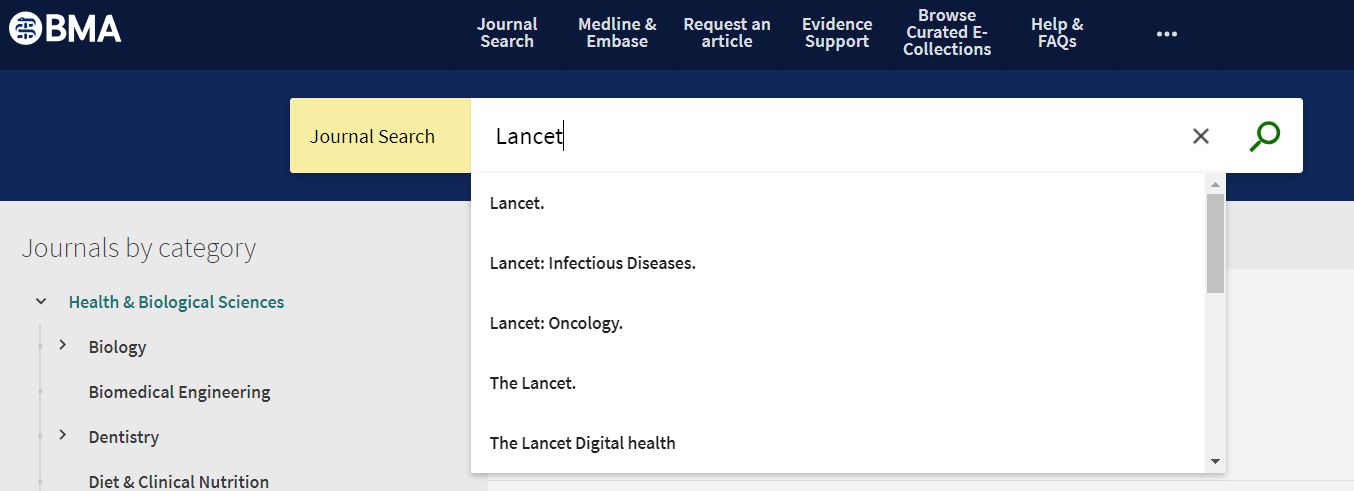
Either finish typing in the title of the journal, or click on the entry if it appears on the drop down list, to access the record and view the e-journal.
If you don’t have a particular journal in mind and instead want to see what e-journals we have available in a particular medical specialty please use the Journals by category links on the left hand side of the Journal Search page.
Searching for an e-book
Enter the title of the e-book you are looking for into the search box of the online catalogue home page and press return. To the left hand side of the list of search results that appears you will see a set of options for tweaking your results. Click on Resource Type and then on the drop down list that appears select the Books option to filter the list of search results to just e-books:
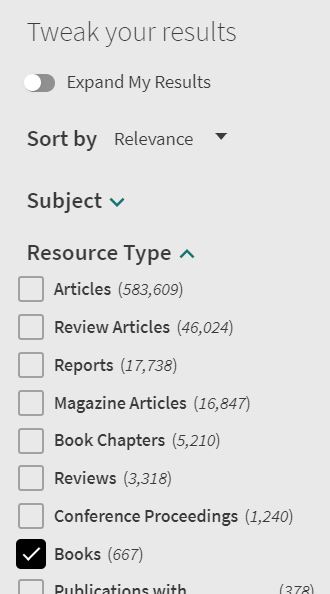
If you don’t have a particular e-book in mind and instead want to see the e-books that we have available in a particular medical specialty please use our E-Books by Medical Specialty curated collection to browse the titles available.
If you have any comments or queries about searching our online catalogue please email: e-resources@bma.org.uk
 BMA library and archive blog